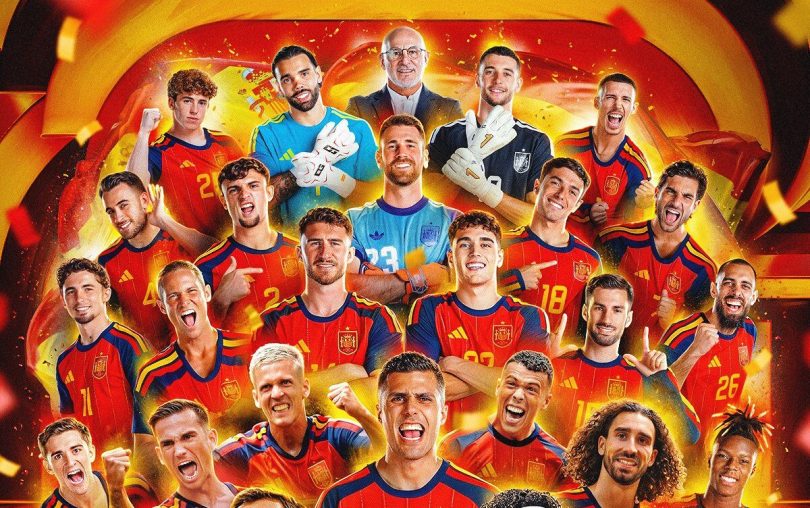
Beyond Spain’s deserved triumph, the tournament reshaped narratives, broke long-standing records and offered several lessons about where modern football is heading
The curtain has finally fallen on the biggest FIFA World Cup in history, and after 104 matches across three host nations, Spain stood alone at the summit of world football.
La Roja defeated defending champions Argentina 1-0 after extra time in a gripping final at the New York New Jersey Stadium, bringing an end to over a month-long spectacle that delivered unforgettable drama, stunning upsets, emerging stars and tactical innovation.
Beyond Spain’s deserved triumph, the tournament reshaped narratives, broke long-standing records and offered several lessons about where modern football is heading.
Here are six defining takeaways from the FIFA World Cup 2026.
Few World Cups generated as much debate as the 2026 edition.
Argentina’s march to the final was marked by several controversial moments, from disputed officiating decisions and VAR discussions to dramatic knockout victories that divided fans and pundits.
Yet when it mattered most, football itself delivered the perfect conclusion.
Spain did not rely on controversy or fortune, dominating the final through superior tactical organisation, technical quality and relentless control of every phase of the game from the blast of the whistle to the final kick.
Even against Lionel Messi and the defending champions, Spain dictated possession, territory, tempo and chances before Ferran Torres eventually found the breakthrough in extra time. The statistics buttressed the point: 0 shots on target for Argentina in over 120 minutes of football says it all.
It was a victory built entirely on footballing excellence. The Argentines were outplayed and outthought in and out of possession, and when the dust settled, the best football team lifted the trophy.
Perhaps that was the tournament’s greatest victory on the part of a neutral.
For years, Spain were associated almost exclusively with possession football.
This team took that philosophy several steps further, as their success was never about keeping the ball simply for statistics. Every pass carried purpose. Every movement created superiority. Every pressing trigger suffocated opponents before attacks could even begin.
Spain controlled matches with and without possession. When opponents had the ball, they pressed aggressively, harrying and harrying, and when they recovered possession, they recycled it with extraordinary composure.
The result was one of the most dominant World Cup campaigns ever witnessed. Even more remarkable was their defensive record; the Champions conceded just one goal throughout the entire tournament, becoming the first World Cup winners to achieve such a feat.
Their defensive structure, positional discipline and collective organisation produced arguably the greatest defensive campaign by any champions in World Cup history.
As modern football continues to evolve, Spain showed that the future belongs not merely to possession but to complete control.
Every great World Cup has a player who defines the tournament.
In 2026, that player was Rodri, and the Spain captain was deservedly crowned Golden Ball winner after orchestrating one of the finest midfield performances ever seen on football’s biggest stage.
Unlike the likes of Bruno Fernandes and Vitinha, who came into the tournament with much promise and form but left, leaving much to be desired. The Manchester City midfielder’s influence stretched far beyond goals and assists.
Rodri dictated the rhythm; he anticipated danger before it emerged, controlled transitions, shielded Spain’s defence, and launched attacks with astonishing precision.
His numbers perfectly illustrated his dominance, completing an astonishing 747 successful passes, out of 799 made; the highest ever recorded by a player in a single World Cup. Remarkably, he broke his own previous tournament record set in Qatar 2022.
No midfielder in the competition combined intelligence, positioning, composure and leadership quite like Rodri.
His performances were a reminder that football’s most influential players are not always the ones making headlines with spectacular goals.
Sometimes, greatness lies in making everything around you function perfectly.
If Spain represented football’s established elite, Cape Verde embodied its growing competitive balance.
Making only their maiden World Cup appearance, the tiny island nation became one of the tournament’s biggest success stories.
Few expected them to survive a difficult group featuring Spain, Uruguay and Saudi Arabia. Instead, Cape Verde stunned the football world.
They held eventual champions Spain to a goalless draw, earned another impressive draw, 2-2, against Uruguay, and shut out Saudi Arabia.
Those disciplined performances secured qualification for the knockout rounds, making Cape Verde the smallest nation ever to reach the World Cup’s last 32.