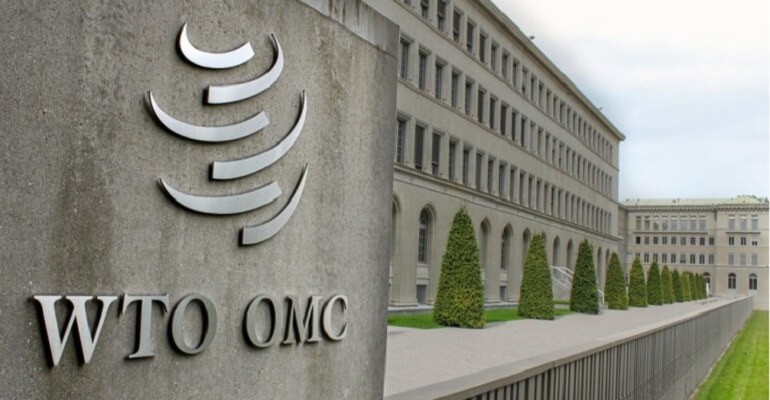
The World Trade Organization (WTO) has called for urgent reforms to global trade rules, warning that a breakdown of multilateral cooperation and the emergence of competing geopolitical blocs could reduce global economic output by as much as 6.9 per cent.
The WTO, in its annual report released on Tuesday, said the global trading system was facing mounting pressure from geopolitical tensions, rising state intervention in economies, digitalisation, changing global value chains and the shifting distribution of economic power.
According to the report, a severe fragmentation of the global economy, in which multilateral cooperation collapses and is replaced by a patchwork of free trade agreements, could result in a 6.9 per cent decline in global GDP and nearly 27 per cent reduction in exports by 2050, compared with a world economy operating under stronger multilateral cooperation.
In a less severe scenario where the global economy fragments into competing geopolitical blocs, the WTO economists projected that global GDP could be 5.1 per cent lower, while exports could decline by 18.6 per cent by 2050.
The report, however, found that stronger multilateral cooperation could have the opposite effect, potentially increasing global GDP by 2.9 per cent and boosting global exports by almost 18 per cent.
The WTO said developing and least-developed economies would have the most to gain from a stronger rules-based trading system, but could also suffer disproportionately if global trade becomes fragmented.
WTO Chief Economist Rob Staiger described the international trading system as being at a “critical juncture”, identifying the changing distribution of economic power, increased government intervention, digitalisation and rising geopolitical tensions as major challenges confronting the multilateral system.
“The rules are under strain and they really are having an impact,” Staiger said, warning that the costs of a collapse in multilateral trade cooperation could be substantial.
The warning comes as WTO members continue efforts to overhaul the organisation’s rules after failing to reach agreement on a reform package at a ministerial meeting in Yaounde, Cameroon, in March.
The organisation’s 166 members subsequently resumed negotiations in Geneva on issues including decision-making, dispute settlement, subsidies and the growing role of government intervention in national economies.
Reaching consensus has remained a major challenge for the WTO because its members have different levels of economic development and often divergent trade and political interests.
The Geneva-based organisation said the difficulty in securing agreement had become more pressing as countries increasingly resort to regional and sector-specific trade arrangements in response to rising geopolitical tensions and trade disputes.
It warned that such arrangements could either complement the multilateral trading system or contribute to its further fragmentation, depending on how they evolve.
According to Staiger, regional trade agreements and plurilateral initiatives have the potential to strengthen global trade cooperation if they remain compatible with the broader multilateral system.
However, he cautioned that they could undermine the WTO if they develop into competing economic blocs that discriminate against countries outside their respective arrangements.
Without a strong global framework, the WTO said, trade could increasingly be diverted towards preferred partners rather than the most efficient producers, while countries could raise barriers against businesses and exporters from outside their blocs.
The organisation’s rules, it added, help limit discrimination against non-members and provide constraints on the way free trade agreements are negotiated and implemented.
The report also highlighted the growing importance of digital trade and global value chains, which have significantly altered the nature of international commerce and created new regulatory challenges that existing WTO rules were not originally designed to address.
In March, a group of WTO members agreed to advance the organisation’s first baseline rules for digital trade through a plurilateral agreement, despite opposition from some members.
The development underscores the increasing willingness of groups of countries to pursue agreements outside the WTO’s traditional consensus-based approach when organisation-wide agreement proves difficult.
The WTO said trade policy uncertainty had reached unprecedented levels in recent years, as governments increasingly deployed tariffs, subsidies, export controls and industrial policies to protect domestic industries and pursue strategic economic objectives.
The trend has become particularly pronounced amid escalating trade tensions and sweeping tariff measures imposed by the United States, raising concerns about retaliatory actions and the wider impact on global supply chains.
The WTO said the increasing use of such measures could weaken the predictability that businesses and investors need to make long-term investment and production decisions.
It noted that approximately 72 per cent of global merchandise trade still takes place under WTO most-favoured-nation tariff terms, compared with about 80 per cent in 2022.
Staiger described the decline as a “worrisome trend”, saying it demonstrated the gradual erosion of the multilateral trading system.
The WTO therefore urged members to use ongoing reform negotiations to modernise global trade governance and ensure that the organisation remains capable of addressing emerging challenges in international commerce.
It stressed that preserving an open and predictable global trading system would be particularly important for poorer economies, which rely heavily on access to international markets and could face greater economic costs if trade becomes increasingly divided along geopolitical lines.