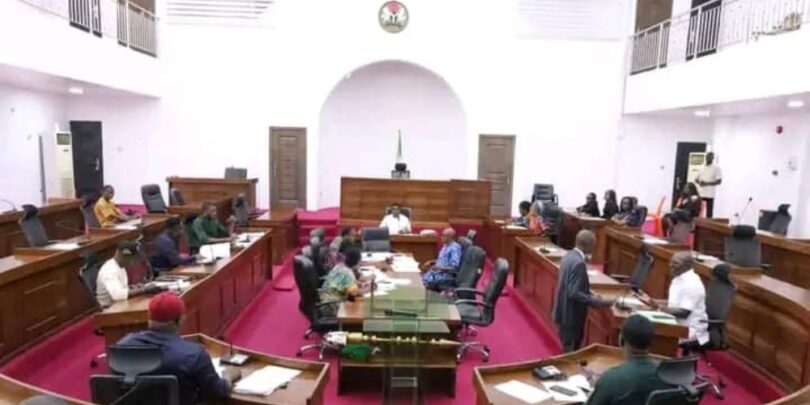
The Abia State House of Assembly has voted unanimously in support of the proposed constitutional amendment to establish state police in Nigeria, adding its voice to growing calls for decentralised policing to address security challenges across the country.
The approval was recorded during the Assembly’s proceedings on Thursday, with Deputy Speaker Austin Nmeregini confirming that lawmakers voted in favour of the proposal.
The development comes as the number of state legislatures backing the amendment continues to rise, with a report published on Friday indicating that 25 of Nigeria’s 36 State Houses of Assembly had endorsed the proposal.
The reported approvals exceed the constitutional requirement of at least 24 state assemblies for an alteration of the Constitution to proceed.
The proposed amendment, contained in the Constitution of the Federal Republic of Nigeria, 1999 (Sixth Alteration) Bill, 2026, seeks to provide a constitutional framework for the establishment of state police services alongside a federal police service.
The National Assembly transmitted the bill to the 36 state legislatures on September 16, 2026, for consideration and approval.
Abia’s approval therefore represents another step in the ongoing national debate over restructuring Nigeria’s policing system, with the implementation of state police dependent on the completion of the constitutional process and the establishment of the necessary legal framework
Speaking on Abia’s position, Nmeregini said the establishment of state police would enable individual states to address their peculiar security challenges more effectively.
He argued that state authorities were better positioned to understand the security situations and geographical peculiarities of their communities.
The proposal is expected to bring policing closer to local communities, potentially improving intelligence gathering, emergency response and crime prevention.
However, the move towards decentralised policing has also raised concerns about possible political interference, inadequate funding and the protection of citizens’ rights.
Critics have warned that state police could be misused by political officeholders against opponents if effective safeguards and independent oversight mechanisms are not established.
The proposed constitutional amendment is yet to complete the full legislative process despite the growing number of state-level approvals.
The next stage requires the resolutions of the state legislatures to be formally communicated to the National Assembly for the necessary constitutional procedures.
As of the time of filing this report, the formal transmission status of Abia’s resolution had not been independently confirmed.
The National Assembly will also need to establish the final number of valid approvals and address any observations or modifications submitted by state legislatures before determining the next steps in the constitutional alteration process.
Even if the amendment receives the required state-level concurrence, additional legal and institutional arrangements would be necessary before state police services could become operational.
The proposed framework is expected to define the relationship between federal and state police services, their respective responsibilities and the safeguards required to ensure accountability and professional conduct.
.