
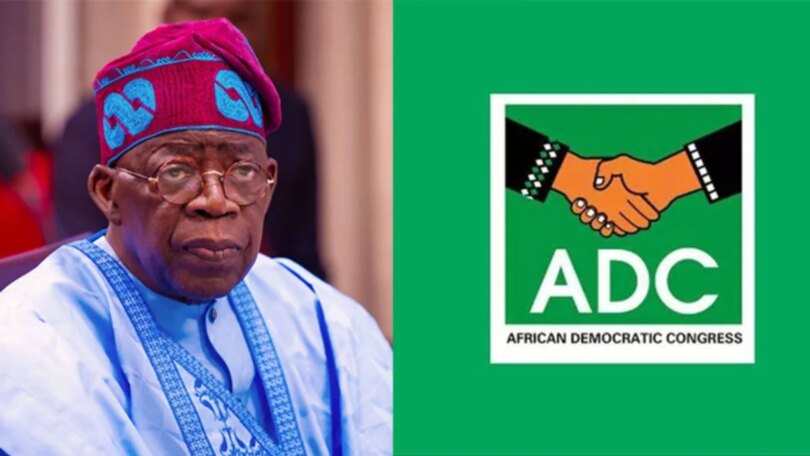
The African Democratic Congress (ADC) has criticised the economic policies of President Bola Tinubu’s administration following the exit of global ride-hailing company, Uber, from Nigeria.
It argued that exit of the ride-hailing company reflects the worsening conditions confronting businesses in the country.
The opposition party described Nigeria as a “graveyard of businesses”, saying Uber’s decision to wind down its operations after 12 years, alongside the closure or downsizing of several multinational companies, raised serious questions about the country’s investment climate.
Bolaji Abdullahi, the ADC National Publicity Secretary, made the position known in a statement issued on Thursday.
Abdullahi said the development contradicted the Federal Government’s narrative of economic recovery, arguing that improvements in headline economic indicators had yet to translate into better living conditions for Nigerians.
The party particularly faulted the government’s celebration of a 0.2 percentage-point improvement in Gross Domestic Product growth, saying the figure was inadequate to justify the hardship being experienced by households and businesses.
“Certainly, a 0.2% growth does not justify the extreme hardship that Nigerians are suffering,” the party said.
The ADC challenged the Tinubu administration to demonstrate how the reported economic growth had improved the lives of ordinary Nigerians, particularly in areas such as household income, food affordability, transportation and employment.
“When the President and his party say things are getting better, we expect them to tell us what has improved in the lives of Nigerians,” it said.
The opposition party attributed the reported exit of Uber to the increasingly difficult operating environment, citing rising energy, transportation and other business costs.
It specifically blamed the removal of the petrol subsidy and naira devaluation for the sharp increase in fuel prices, which it claimed had risen by as much as 1,700 per cent.
The ADC also referenced figures it attributed to the Manufacturers Association of Nigeria, claiming that 767 manufacturing companies, including 20 major global brands, had shut down or ceased operations, while hundreds of others were in distress.
The party listed Microsoft, Jumia, Bolt Food, Pick n Pay, Shoprite, GlaxoSmithKline, Sanofi-Aventis, Bayer AG, Procter & Gamble, Unilever and PZ Cussons among companies it said had either exited or scaled down their Nigerian operations.
It singled out GlaxoSmithKline, noting that the pharmaceutical giant ended its manufacturing operations in Nigeria after five decades.
“Every business that shuts down or pulls out is a vote of no confidence in the Tinubu administration and its capacity to manage the economy,” the ADC said.
According to the party, continued business closures could worsen unemployment and poverty while further eroding the purchasing power of Nigerians.
It maintained that economic growth figures should not be used in isolation to assess the success of government policies, insisting that the real measure should be their impact on the welfare of households and the sustainability of businesses.
The ADC’s criticism followed Uber’s announcement on Wednesday that it would cease its Nigerian operations effective September 2, 2026.
Uber said it had taken the decision after reviewing its business operations, bringing its 12-year presence in Nigeria to an end.
The company said it had been privileged to serve Nigerians since launching in Lagos in 2014, where it connected users with independent transportation providers.
It apologised to customers for the disruption the decision could cause to their daily routines.