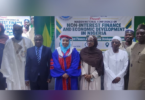

A former Vice-Chancellor of Nasarawa State University, Keffi, Prof. Muhammad Mainoma, has described non-interest finance as a development instrument capable of addressing some of Nigeria’s economic challenges.
Mainoma said non-interest finance should not be viewed merely as an alternative financial arrangement for a particular segment of society, but as a mechanism capable of connecting financing more directly to productive economic activities.
Speaking at the maiden conference of the Nasarawa State University, Keffi, Institute of Capital Market Studies, held on Monday, Mainoma said the principles underlying non-interest finance could support investment, risk-sharing and economic development.
The conference was themed, “Non-Interest Finance and Economic Development in Nigeria.”
According to him, “Non-interest finance is not a peripheral accommodation for a segment of our population. It is a development instrument, and should be examined as such.”
He explained that the model’s emphasis on asset-backed financing, risk-sharing and limiting excessive uncertainty could help address structural weaknesses within the Nigerian economy.
Mainoma noted that linking finance to tangible assets or clearly defined projects could reduce the gap between financial decisions and actual development outcomes.
He, however, said research into non-interest finance should take into account Nigeria’s legal, economic and investment environment rather than relying solely on experiences from other jurisdictions.
“By anchoring the enquiry in Nigeria, this Conference commits itself to the harder and more useful question, which is what non-interest finance can do in our own economy, under our own law, for our own people,” Mainoma said.
The conference chairman pointed to Nigeria’s experience with sovereign Sukuk as evidence that there was a market for non-interest financial products in the country.
THE WHISTLER reports that the Federal Government issued its first sovereign Sukuk in 2017, with proceeds deployed to road infrastructure projects across the country, while successive offerings recorded significant oversubscription.
Also speaking, the Director-General of the Securities and Exchange Commission (SEC), Dr Emomotimi Agama, called for greater attention to non-interest finance, saying the sector had the potential to promote financial inclusion, ethical investment and infrastructure development in Nigeria.
Agama said his participation in a study tour to Malaysia exposed the Nigerian delegation to the country’s well-developed Islamic finance ecosystem, including Islamic banking, Sukuk, Takaful and other Shariah-compliant financial products.
According to him, Malaysia’s experience provides useful lessons for Nigeria as the country seeks to expand the contribution of non-interest finance to economic growth.
“Malaysia has the largest size of Islamic finance products in the world, making it a particularly valuable reference point for a country like Nigeria as we explore how non-interest finance can contribute more effectively to economic development,” Agama said.
He explained that the Malaysian experience was one of the factors that inspired the organisation of the conference, stressing the need for research platforms that examine developments in financial markets from the perspective of Nigeria and other developing economies.
Agama said non-interest finance had gained increasing global attention beyond its religious foundations because of its potential to address key economic challenges.
“Indeed, the theme could not have come at a more appropriate time. Non-interest finance is becoming an increasingly important segment of the global financial system,” he said.
He added that the sector could support financial inclusion, ethical investment and risk-sharing, while also helping to finance infrastructure and strengthen the connection between financial activities and the real economy.
The SEC boss said Nigeria could learn from countries with more developed non-interest finance systems while developing solutions suited to its own economic and regulatory environment.
Agama also highlighted the ambition of the NSUK Institute of Capital Market Studies to become a major centre for capital-market education and research in Nigeria and Africa.
He said the institute, although still young, had a clear vision of becoming a reference point for capital-market education and research.
“We are still young, but we have a very big vision. We want Nasarawa State University Keffi to become a reference point for capital market education and research in Nigeria and, ultimately, across Africa,” Agama said.
He added that the institute’s doctoral programmes were expected to produce research capable of addressing practical challenges in the financial sector and supporting evidence-based policymaking.
“Above all, we want the Institute to contribute meaningfully to solving the financial and economic challenges confronting our dear country Nigeria,” he said.