OLABODE OPESEITAN
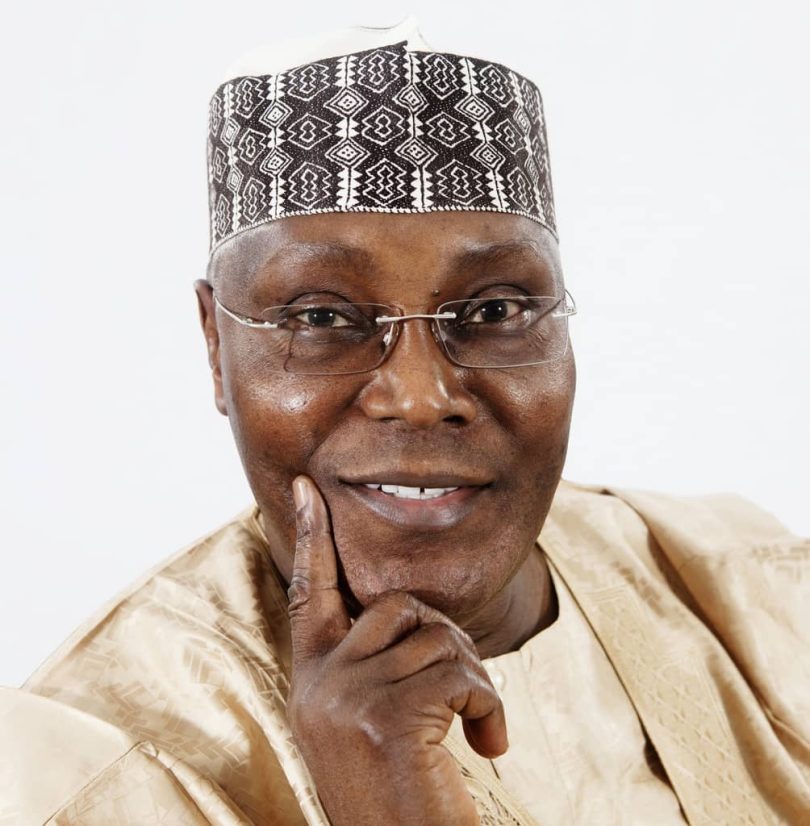
Next year is widely seen as Atiku Abubakar’s final throw of the dice. By the next election cycle in 2031, he will be 85, a stage where stamina wanes, networks thin out, and political capital begins to calcify. He understands this clearly. And because he understands, he is throwing everything into the race. Atiku has always been a political fox: wily, persistent, unembarrassed by reinvention. But he is also a man carrying the weight of a long and bruising history, none more damaging than the verdict of his former boss, Olusegun Obasanjo, who once wrote that Atiku possessed “a propensity for corruption, a tendency to disloyalty, an inability to say and stick to the truth, a belief in marabouts, and a readiness to sacrifice national interest for self and selfish interest.”
Their relationship, from the 2003 power struggle to the Third Term confrontation and the bitter fallout that followed, forms the spine of Atiku’s public identity. The allegations came in waves: The William Jefferson Bribery Scandal, the SPV leak, the privatisation controversies. His defences came too: claims of political witch-hunts, judicial vindications, Obasanjo’s interference in asset sales, and the argument that Nigeria’s state enterprises had become vast financial sinkholes, consuming public funds without delivering value. Yet the pattern remained. Atiku consistently appeared willing to cross any line to stay in the race.
What is emerging now is more troubling. It is a desperation that strains the national fabric. From deleting a tweet condemning the murder of Deborah Samuel to appease a volatile voter bloc, to telling the Arewa Joint Committee that the average Northerner needs a candidate from the North rather than a Yoruba or Igbo contender. It was a statement made in the very moment when a Northern President was just completing eight years in office, a mindless betrayal of the rotational principle Nigerian leaders adopted to protect the nation’s unity. Atiku has repeatedly signalled that unity is negotiable if ambition requires it. His long trail of party defections reinforces the perception of a man for whom ideology is merely a vehicle and Nigeria merely a board on which he must keep playing.
Let us trace that journey: the rise, the rupture, the allegations, the defences, and the choices that now define him. It is not about Atiku the administrator or Atiku the businessman. It is about Atiku the candidate, a man who has pursued the presidency for over three decades and who, in this last attempt, appears willing to test the tensile strength of Nigeria’s fragile unity. The question is no longer whether he wants power. It is what he is prepared to risk to get it.
The Obasanjo Rift: A Wound That Never Closed
Every political biography has a hinge moment. Atiku’s came in 2003, when he briefly considered challenging Obasanjo for the PDP ticket. He controlled the governors. He controlled the party machinery. He could have ended Obasanjo’s presidency before it began its second act. Obasanjo never forgot this. He never forgave it. The relationship deteriorated into a cold war that shaped the country’s political climate for years.
The Third Term battle in 2006 turned the cold war into open hostility. Atiku mobilised lawmakers to block Obasanjo’s constitutional amendment. Obasanjo retaliated by stripping him of authority, attempting to declare his seat vacant, and later writing that God would not forgive him if he ever supported Atiku for president. The language was not metaphor. It was a declaration.
Yet politics is a theatre of contradictions. In 2019, Obasanjo embraced Atiku again, citing Christian forgiveness and the need to remove a failing Buhari administration. It was a temporary truce, a transactional alignment. By 2023, the truce collapsed. Obasanjo backed Peter Obi, arguing that Nigeria needed equity, rotation, and younger leadership. Atiku’s refusal to step aside reopened the wound.
Today, Obasanjo has returned to active hostility. He accuses Atiku of plotting impeachment from day one, of funding Ghali Na’Abba with millions, of being untrustworthy and unfit. Atiku responds by calling the allegations stale and recycled. The feud has become a permanent fixture of Nigeria’s political landscape, a shadow that follows Atiku everywhere he goes.
The Allegations: A Catalogue of Controversy
Atiku’s political journey is punctuated by allegations that refuse to fade. Some were weaponised. Some were exaggerated. Some were grounded in documented investigations.
The Jefferson case linked him to suspicious transfers and a bribery scandal that triggered a travel ban by the US. The SPV leak suggested a system of financial engineering during the Obasanjo/Atiku years. The privatisation programme, which he championed, became the most controversial economic reform of the Fourth Republic.
The Privatisation Fault-lines: A Trilogy of National Loss
The privatisation programme under Atiku’s watch remains one of the most contested chapters of Nigeria’s economic history. It was meant to modernise the economy. It became, in the eyes of critics, a trilogy of national loss.
ALSCON was the most painful. Nigeria invested more than $3.2 billion to build the aluminium smelter in Ikot Abasi, a vast industrial cathedral meant to anchor the country’s manufacturing future. It was sold for $130 million, barely 4% of its value. The dredging of the Imo River, approved at $120 million, as part of the valuation of ALSCON, to make the plant viable, was never completed. The facility collapsed into silence, its machinery rusting in the humidity, its workers sent home with memories of a dream that never materialised.
Delta Steel followed the same tragic arc. Built at enormous cost to form the backbone of Nigeria’s steel industry, it was sold for roughly $30 million. The buyers failed to revive it. Investigations later revealed asset stripping, dismantled equipment, and debts that swallowed the company whole. The government eventually revoked the sale, but the damage was already done. A national industrial hope had become a carcass.
NITEL was the final blow. Once the country’s telecommunications crown jewel, it possessed real estate, fibre networks, satellite stations and decades of investment. After failed bids and political interference, it was eventually sold in pieces. Transcorp acquired a majority stake for $500 million but could not revive it. The company died slowly, overtaken by private GSM operators who built a new industry on the ruins of the old one.
These failures hardened public suspicion. They became symbols of squandered opportunity, monuments to a reform agenda that promised efficiency but delivered decay.
Atiku’s defence is that he was bypassed. He insists that President Obasanjo hijacked the process, cancelled preferred bidders, and imposed his own choices. Former Directors-General of the Bureau of Public Enterprises confirmed that Obasanjo frequently overrode the National Council on Privatisation. Atiku also points out that no court has ever convicted him of wrongdoing.
Yet the most revealing testimony came from Nasir El‑Rufai, the man who ran the BPE. He said both Atiku and Obasanjo pressured him to influence the programme. He described a system where political interests circled the process, each seeking advantage, each trying to bend the machinery of reform. His account exposed the undercurrents of power that shaped the sales, a tug-of-war between two titans whose rivalry left national assets trapped in the crossfire.
The result was a privatisation legacy that is both defensible on paper and indefensible in memory. It is a chapter that continues to shadow Atiku’s ambition, a reminder that the pursuit of modernisation can falter when politics becomes the dominant architect.
The Desperation: A Pattern That Hardens Over Time
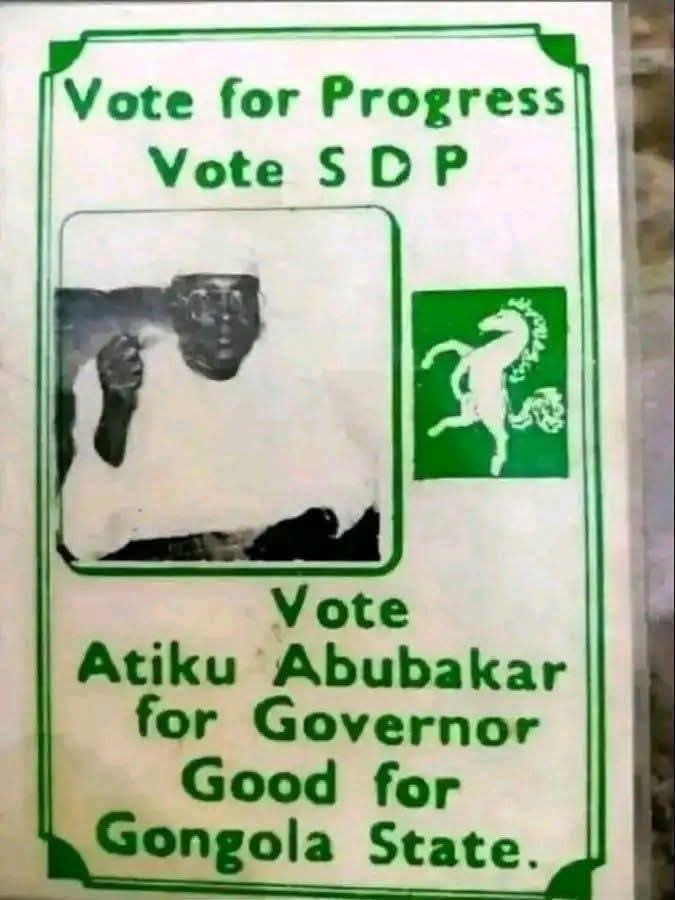
Atiku’s political career is defined by movement. PDP to AC. Back to PDP. To APC. Back to PDP. Now flirting with ADC. Each move justified. Each move strategic. Each move reinforcing the perception of a man who sees parties as ladders rather than institutions.
The Deborah Samuel episode revealed a deeper instinct. He condemned the murder. Backlash erupted. He deleted the tweet. He apologised on his Hausa handle. It was a moment that exposed the hierarchy of his priorities. Votes first. Justice later. Or justice never.
The Kaduna Arewa comment was even more revealing. He told a northern audience that the average Northerner needs a candidate from the North. It was not a slip. It was a strategy. It was also a wound to national cohesion.
Nigeria is a fragile federation. Its unity depends on restraint from its leaders. Atiku’s rhetoric suggested that restraint is subordinate to his ambition.
While many struggled to understand the depth of Atiku’s desperation for the Presidency, Nasir El‑Rufai offered an unsettling insight in his memoir, The Accidental Public Servant, which Obasanjo later affirmed in his own book. El‑Rufai alleged that Atiku’s obsession with becoming President was fuelled by prophecies from his marabouts. He wrote that Atiku urged him not to walk away from government in Obasanjo’s first term because his Cameroonian marabout (spiritual consultant), who had accurately predicted his emergence as Vice President in 1998, had also divined that Obasanjo would not complete his term, a scenario that would have made Atiku President by default.
The irony is that Northern leaders themselves do not share Atiku’s playbook. Former Borno State Governor Ali Modu Sheriff stated on Channels Television that the North has decided to back President Bola Tinubu to complete two terms, arguing that it is not yet the North’s turn to reclaim the presidency. Several influential voices across the region have openly endorsed Tinubu for a second term. There is credible evidence that Northern leaders do not support anyone from the region contesting at this time, a reality that leaves Atiku’s ambition isolated.
The Final Gambit: What He Is Prepared to Risk
Atiku Abubakar is not a villain. He is not a saint. He is a man shaped by the contradictions of Nigeria’s political culture. He is also a man who has pursued one office for about 33 years with a persistence that borders on obsession.
2027 is his last gambit. He knows it. His allies know it. His opponents know it. The question is not whether he will run. It is what he is prepared to risk to make the run count.
Nigeria has battled to emerge from a period of deep uncertainty. Economic strain. Social fragmentation. Political volatility. In such a moment, ambition can be stabilising or destabilising. It can unify or divide. It can elevate or corrode.
Atiku’s record suggests a pattern of sacrificing national unity whenever it clashes with his ambition. His rhetoric suggests a readiness to weaponise identity. His history suggests a pattern of political survival at any cost.
This is not a judgement. It is a mirror. It reflects a man who has shaped Nigeria’s politics for decades and who now stands at the edge of his final attempt. The country must decide whether his ambition aligns with its future or threatens it.
The last gambit of a political fox is underway. The stakes are national. The consequences will be felt long after the dice stop rolling.