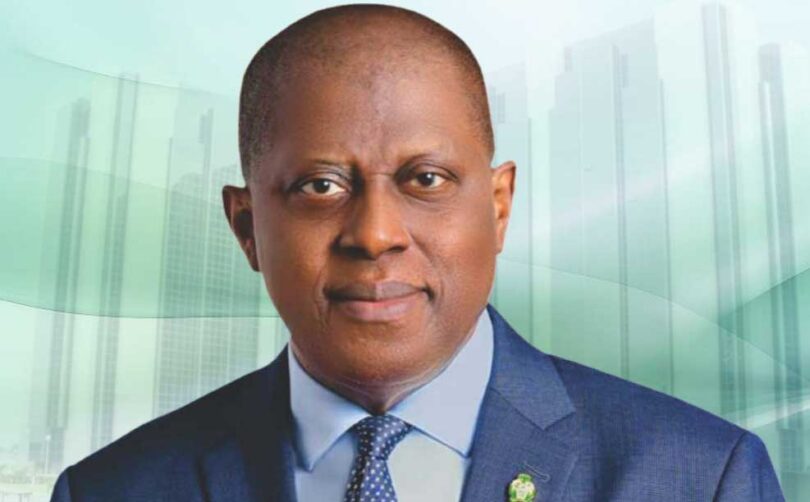
When Olayemi Cardoso assumed office as Governor of the Central Bank of Nigeria (CBN) in September 2023, he inherited an institution at the centre of an economy battling deep-seated monetary and foreign exchange distortions.
Confidence in the naira had weakened. The foreign exchange market was fragmented. Inflation was rising rapidly. The CBN was carrying a substantial burden of Ways and Means financing, while its extensive intervention programmes had blurred the traditional boundaries between monetary policy and fiscal intervention.
The naira was losing value at a pace that made planning increasingly difficult for businesses and households.
Three years later, Cardoso looks back at a period defined by tough choices, institutional reform and, increasingly, evidence of macroeconomic stabilisation.
For the governor, the achievement is not simply that particular economic indicators have improved. It is that the CBN itself has been reset.
The institution has returned to what Cardoso regards as its core mandate of monetary and price stability; the foreign exchange market has been fundamentally overhauled; the banking sector is undergoing recapitalisation; external reserves have been rebuilt to their highest level in more than 18 years; inflation is on a disinflationary path; and the naira has moved from extreme volatility towards greater stability.
Perhaps most significantly, the CBN is now preparing to gradually reduce the intensity of monetary tightening without abandoning the discipline that has defined the past three years.
Reflecting on his 36 months in office, Cardoso offered an unusually personal assessment of the journey. “We were coming from a very bad place indeed. We were coming from a place where confidence had been lost in the bank and in the country,” he said.
“That was manifested very clearly from the confidence that was lost in our currency.”
For Cardoso, therefore, the story of the past three years is fundamentally a story of restoring confidence.
A CBN Reset
One of Cardoso’s earliest and most consequential decisions was to return the central bank to its traditional monetary-policy role.
The CBN had accumulated a large stock of Ways and Means financing, while more than N10tn had been deployed through various intervention programmes.
Cardoso believed the scale of these interventions had made it difficult for monetary policy to perform its primary function effectively.
“We were able to take the bank back to its core mandate,” he said.
That decision marked a significant philosophical change.
Rather than attempting to solve every economic problem through central-bank interventions, the CBN under Cardoso increasingly relied on conventional monetary-policy instruments.
Interest rates became the principal signal.
Liquidity management became more important.
Reserve requirements and other monetary tools were deployed to influence financial conditions.
The result was one of the most aggressive monetary-tightening cycles in Nigeria’s recent history. It was difficult. It was also deliberate.
“The tightening that we have done, in our view, has done its job. It has worked. Policy tools that we have used have worked,” Cardoso said.
The September 2026 decision to reduce the Monetary Policy Rate from 26.5 percent to 23 percent provided perhaps the clearest indication that the central bank now believes the economic environment has sufficiently improved to permit recalibration.
But Cardoso was careful to distinguish recalibration from abandoning discipline.
“We will stay on the course which has been a restrictive one for as long as we have to,” he said. “That’s why I re-emphasise that you should not see this as an easing, it’s a reset and a recalibration. That is all it is.”
The significance of that statement lies in what it says about the evolution of the reform programme. The CBN is no longer responding simply to crisis.
It is attempting to manage an economy moving from stabilisation towards a more normal monetary-policy environment.
The Foreign Exchange Gamble
If there was one reform that defined the early part of Cardoso’s tenure, it was the foreign exchange reset. Nigeria had operated a complicated system of multiple exchange rates, creating substantial distortions between the official and other segments of the market.
Access, rather than simply market conditions, could determine the rate at which foreign exchange was obtained. Cardoso considered the arrangement unsustainable.
“We had a very dysfunctional foreign exchange market, whereby there were multiplicity of rates, depending on who you knew and the access you had would determine the rate you would get,” he said.
The CBN’s response was to move towards a more unified, market-oriented FX system. It was one of the most consequential economic decisions taken under the administration.
The immediate impact was painful. The naira adjusted sharply. Import costs rose. Businesses dependent on foreign inputs had to rethink their pricing. Consumers faced another wave of price increases.
But the reform also began dismantling a system that had become increasingly difficult to defend. “It is not fair that some people should profit at the expense of others,” Cardoso said.
The governor argued that the previous exchange-rate structure was imposing a significant economic cost on Nigeria, estimating the losses associated with the multiple-rate system at about three percent of GDP.
Combined with the fuel subsidy burden, he put the total cost at about 5.2 percent of GDP. “Not sustainable by any stretch of imagination,” he said.
Three years later, the most visible achievement of the FX reform is not necessarily the value of the naira. It is the reduction in uncertainty. The market is significantly more transparent. The huge distortions created by multiple official rates have been reduced. Businesses have a clearer basis for planning.
And the extreme volatility that characterised the early stages of the reform has given way to a considerably more stable market. For Cardoso, that stability is the real prize.
From Volatility To Stability
Asked to identify his proudest moment after three years at the apex bank, Cardoso did not point to a single monetary-policy decision. He pointed to the transformation in the operating environment.
“My proud moment: stability from a situation of great volatility to one where the market is stable. You can plan, you can project,” he said.
That sentence perhaps best captures the essence of the Cardoso reset.
A functioning economy requires more than favourable numbers. It requires predictability. Businesses need to know the approximate cost of foreign exchange before committing capital. Investors need confidence that the rules of the market will remain broadly consistent.