
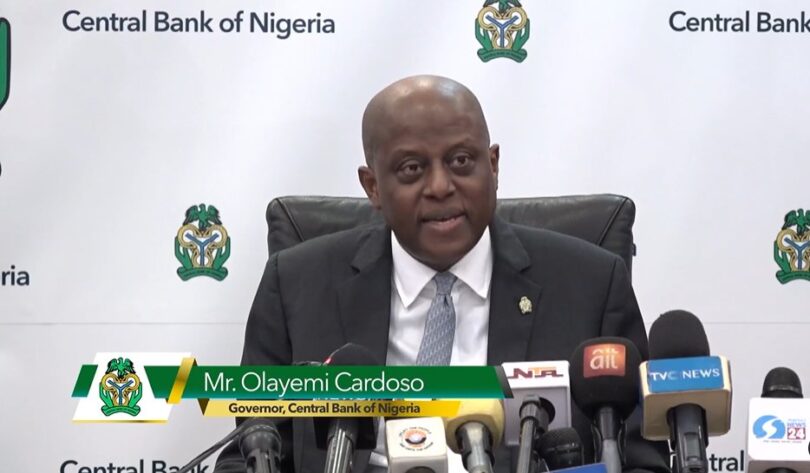
The Central Bank of Nigeria’s Monetary Policy Committee, MPC, has reduced the benchmark interest rate from 26.5 per cent to 23 per cent, signalling a major shift towards easing monetary conditions.
CBN Governor, Olayemi Cardoso, announced the decision on Tuesday at the end of the committee’s 307th meeting in Abuja.
“The Committee decided as follows: reset the monetary policy rate to 23 per cent,” Cardoso said.
The latest decision represents a 350-basis-point reduction in the Monetary Policy Rate, MPR, which serves as the benchmark for borrowing costs across the economy.
The cut also marks a significant departure from the cautious stance maintained by the MPC at its previous meetings.
At its July meeting, the committee retained the MPR at 26.5 per cent, after cutting it by 50 basis points from 27 per cent in February. The July decision was the second consecutive meeting at which the rate was left unchanged.
The latest reduction comes against the backdrop of continued moderation in Nigeria’s headline inflation.
According to the National Bureau of Statistics, headline inflation eased marginally to 15.39 per cent in August 2026 from 15.43 per cent in July.
The August figure represented the third consecutive monthly decline in inflation after a period of renewed price pressures.
The MPC’s decision could have implications for businesses, consumers, investors and the banking sector, particularly through its effect on the cost and availability of credit.
A lower MPR generally reduces the benchmark around which commercial banks and other financial institutions price loans, although the actual lending rates charged by banks are influenced by several other factors.
The CBN had maintained the MPR at 26.5 per cent since February, when the committee reduced it from 27 per cent.
At that meeting, Mr Cardoso said the decision was supported by the sustained disinflation trend, relative exchange-rate stability, improved capital inflows and better food supply conditions.
The latest move comes days after the Federal Government and the CBN agreed to strengthen coordination between fiscal and monetary authorities.
The agreement, contained in a Memorandum of Understanding signed last week, is aimed at improving liquidity management, government borrowing and private-sector access to credit while supporting efforts to bring down inflation.
The CBN is expected to provide further details on the latest MPC decision, including its position on the cash reserve requirement, standing facilities corridor and other monetary policy parameters.
The committee’s decision comes as policymakers balance the need to sustain the recent decline in inflation with efforts to support economic growth and improve access to credit.