The regulator renewed its threat after three episodes of the previously removed production resurfaced online.
The National Film and Video Censors Board (NFVCB) has vowed to ensure that the gay-themed Nigerian web series Living in Colours is removed from YouTube after three episodes resurfaced there.
Its release came four days after the regulator announced that it was working with security agencies to stop a planned premiere and warned exhibitors and promoters against facilitating the project.
Released in seven episodes, Living in Colours attracted more than 90,000 views on each episode during its brief online run, according to figures displayed on the channel before the videos were removed.
By 2 September, the series was no longer available on the Prism House Studio YouTube channel, having been taken down after streaming for only two days.
The removal came amid an unresolved dispute between the filmmakers and the country’s film regulator over the production’s classification and alleged content.
The NFVCB had said the production was neither submitted to nor classified by the Board before its proposed public exhibition.
However, the LGBT-themed series was re-released on 13 September on the same YouTube channel, with three episodes currently streaming.
The circumstances surrounding the initial removal remain unclear. It is not known whether YouTube or the filmmakers removed the videos, whether the NFVCB submitted a formal takedown request, or why only three of the seven episodes were restored.
The online re-release marks a new phase in the dispute. While the NFVCB’s initial intervention focused on stopping a physical premiere in Lagos, the production’s appearance on YouTube has shifted attention to the Board’s regulation of Nigerian films distributed through global digital platforms.
The regulator has maintained that Nigerian productions released on platforms such as YouTube must be submitted for classification and registration before release.
On 26 August, the NFVCB issued a statement titled “Unauthorised Media Event and Premiere of Unclassified Film ‘Living in Colours’,” saying it had been alerted to publicity for a media press call and movie premiere scheduled to take place at a cinema in Lagos.
The regulator said preliminary investigations showed that the trailer contained what it described as “explicit pornography” and promoted same-sex relationships.
The Board subsequently said the production had not been submitted, vetted or classified by it and therefore warned that its public exhibition or promotion would be unlawful.
The NFVCB said it was collaborating with federal and state security agencies to track down, disrupt, and halt the proposed event.
It also contacted the proposed venue and warned that hosting an unclassified film could attract sanctions, including the facility’s sealing and the revocation of its operating licence.
The Board further said it was initiating legal proceedings against the production company, producers, and promoters involved.
However, it has not publicly disclosed whether the threatened proceedings have been filed or provided details of any case.
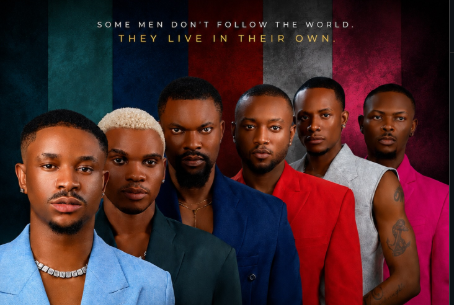
Living in Colours is a Nigerian production by Prism House Studio, with Manuel Ruben credited as producer.
Tega Idogho and Udo Casciavit directed the production.
The cast includes Solomon James, Gabby John, Kris Shaddy, Khalid Omokalemoh, Mirable Samuel, Temitope Alex, Joshua Eronini, Daniel Nsude and Emery Ogolo.
The production was promoted through social media ahead of its proposed premiere and subsequent online release.
Living in Colours follows five young flatmates, Jeremy, Chris, Robert, Justin, and Shawn, living together in Lagos while navigating relationships, sexuality, friendship, ambition, and personal struggles.
Justin, an effeminate character, goes out to meet a date but is attacked by hoodlums who object to his feminine appearance. He is rescued by Chris, his housemate, who does not identify as gay but lives in a house occupied by people with different sexual orientations.
Robert, portrayed as self-absorbed and unsuccessful in his attempts to find a romantic partner, eventually meets someone he finds attractive. The encounter, however, turns into a trap, leading to his abduction and beating.
The story later reveals that Chris orchestrated Robert’s kidnapping because he needed money to attend to his critically ill mother.
Chris, who is very masculine and does not openly identify as gay, later becomes involved in a sexual relationship with Justin’s date, a married man, whose wife subsequently escalates the affair.
Shawn is portrayed as bisexual and sexually adventurous, with his choices eventually carrying consequences for him. Jeremy, meanwhile, becomes involved in an office romance that ultimately costs him his job.
Through the lives of the five characters, the series explores the tensions among personal identity, relationships, friendship, sexuality, and survival in contemporary Lagos.
The NFVCB’s intervention comes against the backdrop of Nigeria’s strict legal framework governing both film exhibition and same-sex relationships.