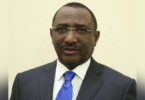
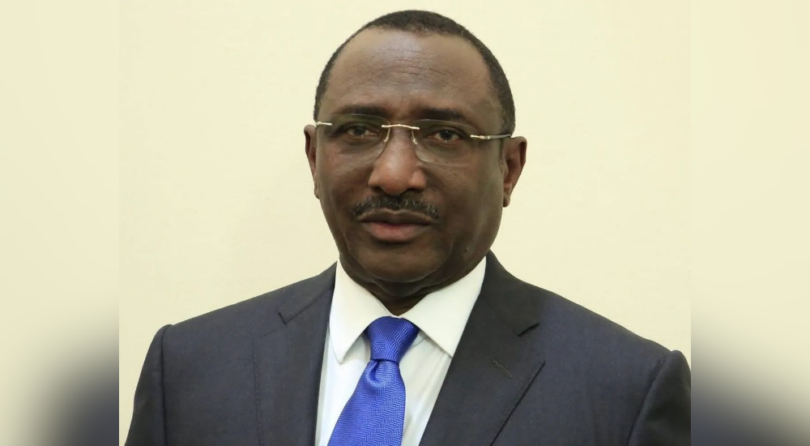
Former Guinean Prime Minister Sidya Touré, a veteran opposition politician who remained a prominent figure in the country’s political affairs for decades after leaving government, has died in Paris, France, aged 81.
Touré died on Friday, September 25, 2026, after falling ill and being hospitalised at the American Hospital of Paris, according to sources close to his family.
He had reportedly spent several months in Abidjan, Côte d’Ivoire, before being transferred to Paris, where he had been receiving treatment for about two weeks.
Touré served as Guinea’s prime minister under President Lansana Conté from July 1996 to March 1999.
He was appointed to head the government during a period of economic and political difficulties and became the first person to occupy the prime minister’s office after the position had been suspended for several years.
After leaving government, Touré became a prominent opposition politician and headed the Union of Republican Forces, UFR, which he founded and led for decades.
He contested Guinea’s presidential elections in 2010 and 2015 and remained one of the country’s prominent opposition figures.
Touré also served as a high representative to President Alpha Condé from 2016 to 2018 before returning to opposition politics.
He left Guinea following the September 2021 military coup that removed Condé from power and subsequently lived in exile in Côte d’Ivoire.
His death comes months after Guinea’s authorities dissolved the UFR alongside 39 other political parties in March 2026. The dissolution formed part of a wider restructuring of the country’s political landscape under President Mamady Doumbouya.
Guinea’s current Prime Minister, Amadou Oury Bah, paid tribute to Touré, describing him as a prominent figure in the country’s political life for three decades and a pragmatic reformer.
“We bow before his memory,” Bah said in a message posted on X.
Touré’s political career spanned senior government service, opposition politics and several major political transitions in Guinea, making him one of the country’s most recognisable political figures of the post-independence era.