For her part, Shaath’s lawyer, Damia Tahraoui, told The New Arab that the deportation notice is based entirely on public political statements and positions, not on any judicial conviction. [TNA]
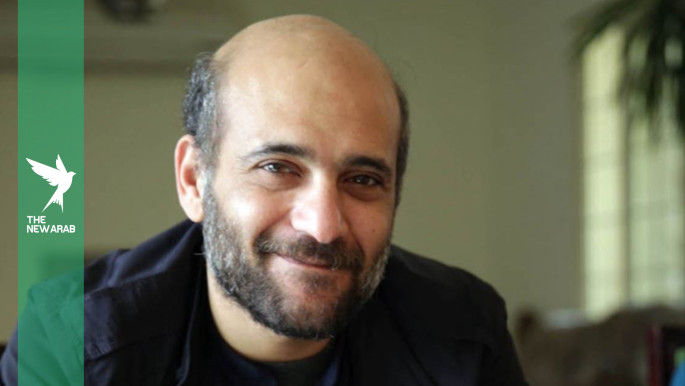
After believing that the Nanterre prefecture, where he lives with his family near Paris, had finally summoned him to hand over a long-awaited residence permit, Palestinian political activist Ramy Shaath left the prefecture headquarters carrying an official notice informing him that the French authorities intended to deport him from the country because he posed “a threat to public order”.
Shaath told The New Arab that he received the letter “after two and a half years of pressure and manipulation”, adding that he was shocked that his file had shifted from a residency request to an attempt to expel him from the country where he has lived since 2022 with his French wife and daughter.
Shaath confirmed that the notice presented to him “contains no criminal charge”, but is based entirely on his political positions in defence of the Palestinian cause.
“The whole case is based on the fact that I participate in demonstrations and express my political opinions in lectures and conferences. They do not accuse me of violence, incitement to violence, or antisemitism, because I have done none of these things. So how have I become a threat to the security of France?” he said.
According to Shaath, the document he received includes direct references to his speeches and participation in public events, including his criticism of the two-state solution and his support for the establishment of a “democratic Palestinian state from the river to the sea”.
“I said that the two-state solution was a deception used for 30 years to colonise our country, and I will say that again tomorrow. Where is the crime in that?” he added.
Shaath said the French authorities “treat Palestinian identity itself as a threat”, adding that “my political speech, my Palestinian identity and my defence of the rights of my people have become crimes for the French government”.
He believes the measures against him are part of “a broader campaign targeting the pro-Palestinian movement in France since the start of the war on Gaza”.
Shaath explained that the current procedure remains in its initial phase, with his case due to be presented on 21 May before the regional deportation commission in Nanterre, an advisory body expected to issue an opinion before a final decision is taken.
However, he downplayed the significance of the stage, saying the authorities “are legally obliged to present the file to the commission, but are not obliged to follow its opinion”.
“The commission could reject the deportation, and then the authorities could come the next day to deport me and issue another decision,” he added.
In his interview with The New Arab, Shaath described the security file attached to the administrative procedure as “full of racism and Israeli language”.
He said the document extensively discusses his relations with French pro-Palestinian movements and groups, as well as his activities in the “Urgence Palestine” movement, which he helped establish, and his participation in seminars and demonstrations, all of which he said were legally authorised.
“One section of the document says I was wearing military clothing and acting like a general during one seminar, while I was actually wearing a jumper and jeans and explaining the history of Palestine at a cultural event. Should I sue the company where I bought the clothes because they are causing me problems?” he added, sarcastically.
Shaath also accused the authorities of relying on reports and complaints issued by pro-Israel organisations, saying some paragraphs in the file were “copied literally” from campaigns launched against him by Zionist lobbying groups in France.
He added that the file also contains references to contacts he made with “cultural institutions and Palestinian intellectuals around the world”, which he considered evidence of “security surveillance of my communications, which has no legal basis”.
Last year, Shaath was investigated over allegations of “glorifying terrorism” after the then Paris police chief, current Interior Minister Laurent Nunez, said Shaath had “crossed the red line” through statements he allegedly made during a rally in support of the Palestinian people held in Paris in November 2023.
Nunez said Shaath declared at the time that “the real terrorism is Israel”, which the French official interpreted as “an indication that Hamas is not a terrorist”.
However, French courts closed the case in June 2025 after finding insufficient evidence to support the charge against Shaath, according to his lawyers.
The Palestinian activist now believes that after the French authorities “failed to find any criminal basis”, they moved to use exceptional administrative measures to deport him.
Regarding the possibility of a final deportation order and its implementation, Shaath said the French authorities could deport him neither to Egypt, which revoked his citizenship after his release from its prisons in 2022, nor to the Palestinian territories, where European laws prohibit deportation to conflict and war zones such as Gaza.
He said the most likely scenario, in his view, is that he will remain in France without legal rights.
“The real danger is keeping me in a fragile situation, without residency, without the right to work or travel, and under permanent threat of house arrest and administrative prosecution,” he said.
Shaath stressed that the pressure did not begin with the deportation order but had accompanied him since his arrival in France.
He said the authorities obstructed the renewal of his residency permit since autumn 2023, leading to the suspension of his work, the closure of his bank account and the suspension of his health insurance, despite previously undergoing two heart surgeries.
“One day I went to buy my medication, and I was told my health card had been suspended because my residency had not been renewed,” he said.
He added that these measures also affected his family life, as the husband of a French citizen and father of a French child, but the authorities act as though his wife and daughter “do not exist”.
He considers that the case “has gone beyond political pressure to targeting family life itself”.
In contrast to the position of the French authorities, Shaath said he had received support from rights organisations and political figures ahead of the 21 May hearing, citing contacts with Amnesty International, UN rapporteurs, and French local elected officials.
“If they want to deport me or imprison me, let them do it before the French people. What I reject is for France to become a country that punishes people for their political opinions in the name of protecting Israel,” Shaath concluded.
For her part, Shaath’s lawyer, Damia Tahraoui, told The New Arab that the deportation notice is based entirely on public political statements and positions, not on any judicial conviction.
She said the French authorities rely particularly on his participation in founding the “Urgence Palestine” organisation, his use of political slogans such as “from the river to the sea”, and his criticism of the two-state solution.
Tahraoui stressed that the opinion of the regional deportation commission “is not legally binding”, suggesting the authorities are likely to continue pursuing deportation regardless of the commission’s position.
She also explained that security services had already recommended placing Shaath under house arrest, with an obligation to report daily to a police station.
The case carries a political irony, as Shaath arrived in France in 2022 after diplomatic pressure, in which Paris participated, to secure his release from Egyptian prisons.
French President Emmanuel Macron welcomed his arrival in Paris at the time, writing in a post on X in early 2022, “I welcome the decision of the Egyptian authorities to release Rami Shaath. I share with his wife, Celine Lebrun, the relief of meeting him again in France. We did not abandon this cause. I thank everyone who played a positive role in this happy ending.”
Commenting on the shift, Shaath said, “Everything has changed since the start of the war in Gaza. France, which welcomed me in the name of human rights, has today, in my opinion, criminalised every Palestinian discourse that does not align with the Israeli narrative.”
Article translated from Arabic by Afrah Almatwari. To read the original, click here.