Kano State’s fight against illiteracy is facing a major funding setback, with the agency responsible for mass education recording zero capital expenditure in the first six months of 2026 despite a N1.4bn budget, while only 5.2 per cent of its N716m capital allocation was released in 2025.
Analysis of budget documents by THE WHISTLER spanning between 2025 and half year 2026, reveals a troubling pattern.
For instance in the 2026 fiscal year, a sum of N1.4bn was allocated for the Mass Education Agency’s capital projects, but the agency had spent nothing on capital expenditure as of half year representing January to June, 2026.
This development has begun to raise questions about the government’s commitment to tackling illiteracy and expanding access to education among vulnerable residents.
The agency is responsible for promoting literacy, providing vocational training for adults and youths, and extending educational opportunities to out-of-school children across the state. Yet, budget performance figures suggests that its capacity to deliver on these responsibilities remains constrained by poor funding execution.
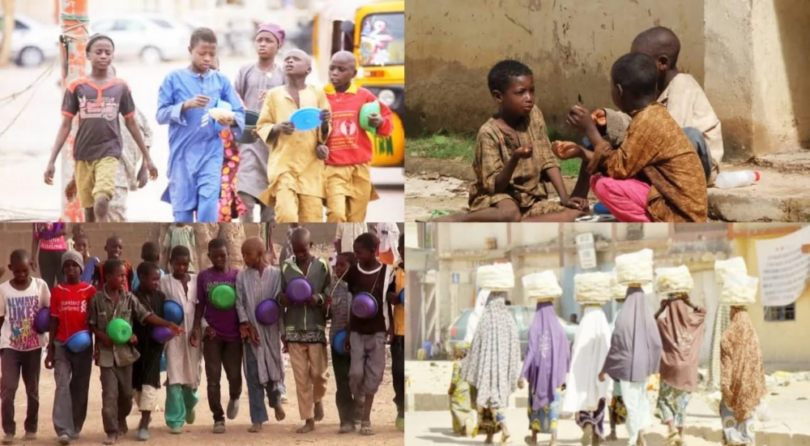
The situation comes amid troubling education indicators in Kano, where 35 per cent of school-aged children are deprived of access to education, according to the National Bureau of Statistics (NBS) in its multidimensional poverty data.
In addition, 69 per cent of residents aged 10 years and above are said not to have completed six years of schooling.
These figures highlight the scale of the challenge facing a state with a large population of children and young people who need opportunities to acquire basic literacy, numeracy and practical skills.
In 2025, the agency had a capital expenditure budget of N716m. However, only N37m was released, representing approximately 5.2 per cent of the approved allocation.
This left about N679m, or 94.8 per cent of the capital budget, unreleased.
The funding shortfall limited the resources available for capital projects that could support the agency’s work, including the expansion and improvement of facilities and programmes intended to bring education to people who have missed out on formal schooling.
The figures suggest that increasing budgetary allocations alone may not translate into improved educational opportunities if funds are not released and projects are not implemented.
For a state where millions of residents may require literacy support or alternative pathways to education, the gap between budgetary provisions and actual spending raises questions about the priority given to mass education.
The consequences extend beyond government accounts
Limited funding for mass education has been said to have potential of undermining efforts to provide learning opportunities for adults who never attended school, young people who dropped out and children who remain outside the formal education system.
Without adequate investment, vocational training programmes may struggle to reach their intended beneficiaries, while literacy initiatives may fail to expand to underserved communities.
The figures according to experts also raise concerns about the relationship between public spending and the state’s broader efforts to address educational exclusion.
In an interview with THE WHISTLER an education policy expert, Bayero University Kano, Dr. Summayya Umar, said inadequate funding and poor budget execution could weaken government interventions aimed at reducing illiteracy and helping out-of-school children return to learning.
“Where an agency is established to address illiteracy and provide alternative learning opportunities, the release and effective use of funds are essential. Allocations on paper cannot deliver results unless the money reaches programmes and projects,” the expert said.
The expert added that the government needed to assess the agency’s performance against measurable outcomes, including the number of adults enrolled in literacy programmes, children reached through non-formal education and youths trained in vocational skills.
Beyond funding, accountability remains critical
An education and public finance analyst, Anas Habibu, told THE WHISTLER that persistent gaps between approved budgets, releases and actual expenditure should prompt closer scrutiny of budget implementation.
“Budget performance should be measured not only by how much government approves but also by how much is released, spent and translated into services for the people. When capital spending remains at zero halfway through the year, the government needs to explain the reasons and how the agency will meet its targets,” the analyst said.
The analyst recommended that Kano State improve the predictability of releases, publish implementation updates and link expenditure to clearly defined literacy and vocational training targets.
For residents who have been excluded from formal education, the stakes are significant. Basic literacy can improve access to employment, public information and essential services, while vocational training can create pathways to livelihoods for young people who might otherwise remain economically disadvantaged.
Kano’s education challenge requires more than budget announcements. It demands timely releases, effective implementation and evidence that public spending is reaching the people the agency was created to serve.
With only N37m released from its N716m capital allocation in 2025 and no capital expenditure recorded by mid-2026 despite a N1.4bn budget, the agency’s performance raises a fundamental question: how can Kano make meaningful progress against illiteracy and educational exclusion if the institution responsible for addressing them cannot translate its budget into action?