
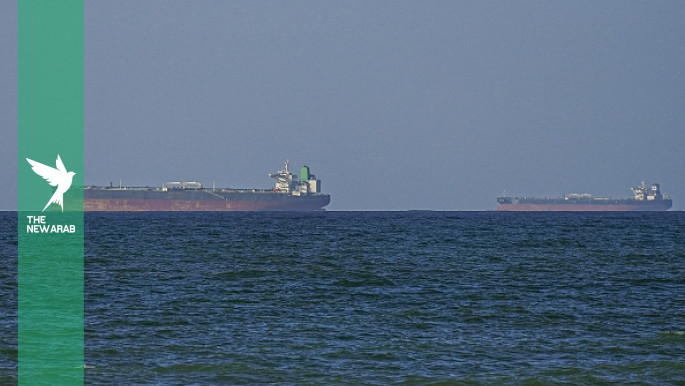
The strait has been largely closed to traffic for seven weeks, triggering one of the largest global energy crises in history. [Getty]
The conflict over the Strait of Hormuz continued on Saturday after Iran’s military said it would resume “strict management” of the waterway in response to the US blockade on Iranian ports, effectively closing it.
Previously, on Friday, Iran’s Foreign Minister Abbas Araghchi declared that the strait is “completely open” for the duration of the ceasefire, leading to the largest surge in traffic since the US and Israel launched a war on Iran, on 28 February.
Around 30 ships were passing through the strait at 0900 GMT on Saturday – more than two dozen of which were oil tankers – with more following behind them in the Gulf, according to MarineTraffic data.
But US President Donald Trump has refused to lift the blockade of Iranian ports, vowing to leave it in place until a peace deal is signed.
In a statement on state TV, Iran’s military accused the US of breaking its promise and announced it would return the strait “to its previous state”,
The strategic waterway, which before the war carried a fifth of the world’s oil and gas, has been largely closed to traffic for seven weeks, triggering one of the largest global energy crises in history.
There had already been confusion about the status of the strait after channels affiliated with the Iranian Revolutionary Guards (IRGC) said ships would continue to face restrictions.
Vessels would still be required to use an IRGC-controlled corridor and ships linked to “hostile countries” would continue to be blocked, IRGC-affiliated media said on Friday.
Friday’s news of the opening of the strait sparked elation in the global markets and sent oil prices plunging more than 9%.
The announcement also boosted Pakistan’s efforts to broker a peace deal between Iran and the US, which has been complicated by the dispute over the strait. Another hurdle to a second round of peace talks was overcome yesterday after a ceasefire between Israel and Hezbollah came into effect.
Trump hinted that there may be fresh negotiations with Iran over the weekend following the breakthroughs. “I expect things to go well. Many of these things have been negotiated and agreed to,” he told reporters on Friday.
The strait has effectively been under Iran’s control since the beginning of March, when it closed it in response to the US-Israeli war. Tehran has since been charging fees on the small number of vessels to have left Gulf waters and has sought to leverage its control over the strait in the ongoing peace negotiations.
Iran and the US were unable to reach an agreement during marathon talks in Pakistan over the weekend. Pakistani officials, who are leading international efforts to broker an end to the conflict, are racing to set up new talks to prevent a return to a the destructive six-week conflict.
Trump, who has struck an optimistic tone over a peace deal, on Friday raised the possibility of a return to war if no deal is reached.
Iranian and Pakistani officials have indicated that an interim agreement may be struck by the end of the ceasefire on 22 April, paving the way for technical talks aimed at a final settlement.
The two sides are believed to remain far apart on the nuclear issue, including over curbs on Iran’s enrichment capabilities and the fate of its stockpile of enriched material.