
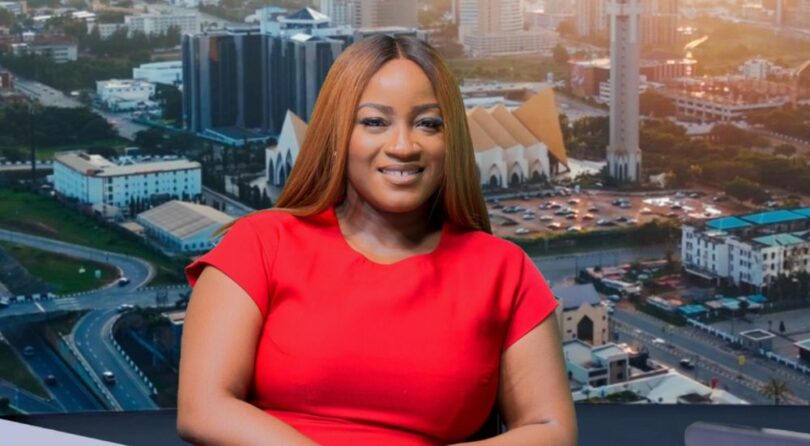
Development economist and policy professional, Sarah Adidi, describes herself as a fresh voice in Nigerian politics and a passionate advocate for youth-focused, accountable leadership. She visited THE WHISTLER to share her vision for the Bwari/Abuja Municipal Area Council Federal Constituency and her ambition to secure the APC ticket ahead of the primaries.
In this interview with Justina Simon, she speaks on her motivation to run, her plans for the FCT, and why women and young girls remain central to her legislative priorities.
Excerpts
What has been your experience from meeting stakeholders and engaging with your constituents?
I’ve seen a lot of support from different groups, not just women, but across the FCT. It’s been interesting.
What’s the motivation for seeking a seat in the House of Representatives?
Well, I’ve always known from a young age that I would enter politics. Even when I was young, when people would ask me what I wanted to be when I grew up, I always said that I wanted to be the President of Nigeria.
I think that it’s something that is in me. I have a passion for people, and I’ve always wanted to serve, and so that is kind of what motivated me to take this step at this time.
What are you bringing on board in this case, because we’ve had a lot of women like you in this system?
So I think that both my academic and my professional careers have really helped and shaped me to stand out from the crowd.
I’ve studied economics, and I’ve worked in the development space for almost 15 years now, and I have had the opportunity to work across Africa and to understand governments – what works and what doesn’t work. And that experience, I am ready to bring to the Nigerian legislature.
This is the first time you are coming into the field of politics. So what experience would you say you’ve learned from this engagement?
So I think that I am a person who has always—once I have something in mind to do—I will do it, and I will always go all in. I am a very determined person, and so when I felt the push in my spirit to go on this journey, I felt that there was no better time than the present.
Why is advocating specifically for female representation important to you, rather than adopting a general “for everyone” approach?
So first of all, if elected, by the grace of God, I, of course, would be a representative of everyone in the FCT because obviously it’s not just women that live here. However, statistics have shown that countries that have more women in government and in leadership positions fare better because you can’t sideline half of the population and expect true development. Every voice needs to be heard.
There is a perception that Nigerian women have not always excelled in elective or appointed popositions. That they rather cause troubles. Referencing cases like that of Senator Natasha, why do you think your case is going to be different?
I think that’s actually kind of a false narrative. We see women who are bold, and I think that that is also a case of Nigerian culture. When a woman is outspoken or self-assured, she is labelled as difficult.
And when we look at the deputy governors, even at Senator Natasha, even in the face of opposition and resistance, they still put their people first. They still make sure that their constituents are well served. You can see that Senator Natasha is still doing a lot of constituency projects, and her people are behind her.
So I think that is also a benefit of women in politics because they make sure that they carry their people along. We’re natural nurturers, and we always want to see the good of everybody. So that is why it’s important for more women to be involved in government.
Did you put yourself in her shoes during that controversy, thinking you would have handled it differently?
As an outsider, I can’t really say how the intricacies of the National Assembly work because, I mean, I’m not there yet, and I’m not in her shoes.
I’m sure that she probably handled it the way that she felt was best. So yeah, I’ll leave it at that.
Personally, did you feel she received the support she needed from the womenfolk?
Well, it was a bit disheartening to see that there are only four women senators, and it didn’t really seem like there was a lot of vocal support for her.
But again, because I’m not there, I don’t know the full extent. We only know what we see on TV and in the news.
You’ve been moving, advocating, and meeting stakeholders. What have you been receiving from the constituents and stakeholders?
I’ve been receiving very good feedback. I have seen that a lot of people are rallying around me, and even those that I have not met yet, I’ve been hearing from other sources that they’re ready to support me. So I’m very grateful to the people of the FCT.
What about your political structure? You’re new in the system. Where are you getting the backing from?
Well, so far, I have been receiving good support from the APC. The APC actually prides itself on being a progressive, as the name suggests, and inclusive party, especially for youth. So I have been receiving good support so far.
If you take a look at what’s happening in governance, are you scared that even if you were to get the ticket, this may not resonate with voters in the FCT—the killings, bad economy? Are you scared of the challenge?
So I understand why people are a bit hesitant towards the APC because of the recent insecurity and cost of living. There have been a lot of challenges in the past few years. What I will say about the APC is that despite what it looks like, I think that they generally do have the interest of the citizens at heart. I just think that there has been maybe a miscommunication in how they are putting out their accomplishments and achievements. But I do know that they are still working very hard for the people and trying to ensure that a lot of these challenges that the Nigerian people are facing will be overcome in the near future.
You’re not worried at all?
No.
So much money has been mentioned to buy tickets, to canvass for votes—in fact, to get delegates and all of that. Is the monetisation of the primaries in political parties a concern to you? Have you canvassed for a change so that women can play the game?
I mean, politics is expensive. It is very expensive. Even before I got into this race, I counted the cost because it’s not easy. But for the APC, they have at least been able to reduce the cost of forms for women and youth.
So I’ll be able to benefit from that. And also, when it comes to the primaries, there’s been a shift. So this year, they’re going to direct primaries or concessions. So it’s not even a question of buying votes from anyone because anybody who is a card-carrying member of the APC can vote.
If you look at the current representation, what are the gaps that you see that you feel you could tackle if you get elected?