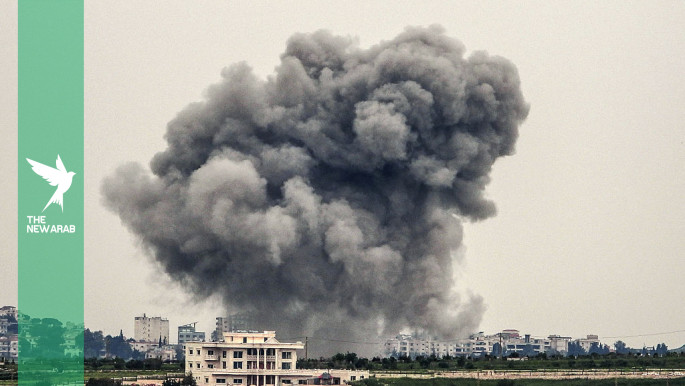
Earlier on Sunday, Hezbollah said it had attacked Israeli troops inside Lebanon as well as the rescue force that came to evacuate them [AFP via Getty Images]
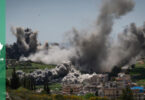
Israel’s military issued new displacement orders for southern Lebanon on Sunday, ordering residents to leave seven towns that lie beyond the “buffer zone” it occupied before a ceasefire that has failed to bring a full halt to hostilities.
A spokesperson for the Israeli military said in a statement on X that Lebanese armed group Hezbollah was violating the ceasefire and that Israel would act against it, telling people to head north and west away from the towns.
The towns are north of the Litani River and the zone in southern Lebanon occupied by Israeli troops, who have continued military operations despite the ceasefire.
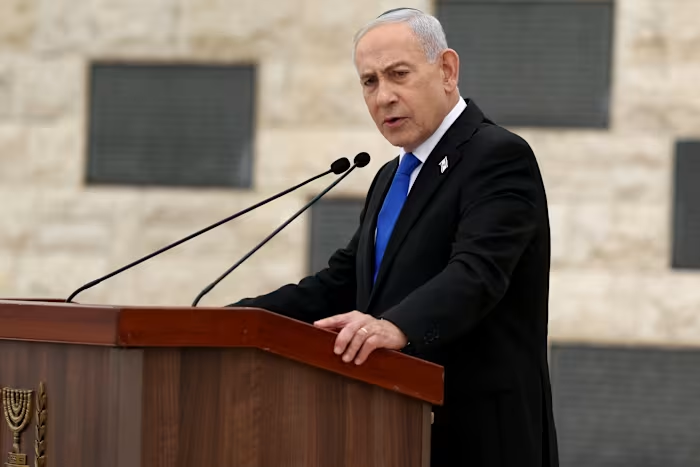
“From our perspective, what obliges us is the security of Israel, the security of our soldiers, the security of our communities,” Israeli Prime Minister Benjamin Netanyahu said at a cabinet meeting in Jerusalem.
“We act vigorously according to the rules we agreed upon with the United States, and also, by the way, with Lebanon.”
The Israeli military said it had intercepted three drones before they crossed into Israeli territory, after sirens sounded in northern Israel.
Earlier on Sunday, Hezbollah said it had attacked Israeli troops inside Lebanon as well as the rescue force that came to evacuate them.
The group also rejected Israeli Prime Minister Benjamin Netanyahu’s accusation that it was jeopardising a ceasefire, saying in a statement that its attacks on Israeli targets in south Lebanon and northern Israel were “a legitimate response to the enemy’s persistent violations of the ceasefire since the first day of the announcement of the temporary truce”.
“Hezbollah affirms clearly and firmly that the enemy’s continued ceasefire violations… and above all its continued occupation of Lebanese territory and violations of its sovereignty will be met with a response and a resistance that is… ready to defend its land and people,” the statement said.
The US-mediated ceasefire, which started on 16 April and has been extended to mid-May, has brought a significant reduction in hostilities between Israel and Hezbollah, though both sides have continued to fire at each other, trading blame over breaches.
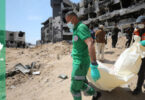
Nearly 2,500 people have been killed in Israeli strikes since the most recent war between Hezbollah and Israel began on 2 March, days after the US and Israel launched strikes against Iran.