Kuwait has revoked the citizenship of 1,266 people, including a former MP and a national team footballer, in the latest phase of a sweeping campaign authorities say is aimed at “cleansing” the country’s nationality records.
The decision, issued through six decrees on Sunday, affects a wide range of individuals, including former parliament member Anwar al-Fikr and former Kuwait international goalkeeper Nawaf al-Khaldi, according to the official Kuwait Today gazette .
The latest move brings the total number of revoked citizenships to more than 43,000 since 4 March 2024.
The government has described the campaign as an effort to address alleged fraud in the citizenship system dating back to the introduction of the nationality law in 1959.
Authorities have referred to the process as a “cleansing” of the citizenship file, a campaign that peaked between November 2024 and February 2025 before continuing in successive waves.
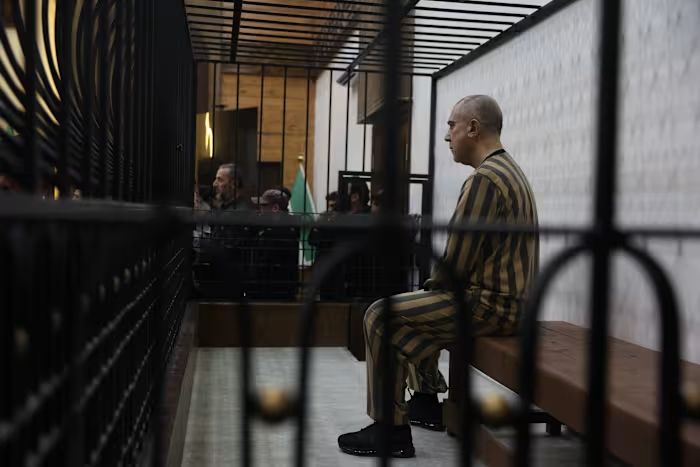
Al-Fikr’s citizenship was withdrawn after it was stripped from his father and uncle. He has been serving a six-year prison sentence since January 2025 following two rulings in what were described as “state security cases”.
In April, the Court of Cassation sentenced him to three years in prison for “undermining the rights and powers of the Emir” during remarks made to a local media outlet.
A second three-year sentence was issued by the Court of Appeal in November over similar comments made during a political seminar in the 2024 election season.
Al-Khaldi, meanwhile, is among those affected by a new wave of revocations launched this month targeting children of Kuwaiti women.
Prior to recent amendments, Kuwaiti nationality law allowed divorced or widowed Kuwaiti women to pass citizenship to their children.
Among others affected in the latest campaign are preacher Nabil al-Awadi and artist Abdul Qader al-Haddoud.
Although the initiative began as a crackdown on alleged fraudulent citizenship claims, it has since expanded to include foreign wives of Kuwaiti men and individuals who obtained nationality under the “exceptional services” clause, which had previously been permitted under Kuwaiti law.
Prominent figures affected over time include cleric and former national team player Ahmad al-Tarabulsi, writer Abdulaziz al-Saree, Dr Yahya al-Hadidi, described as the first Arab doctor to arrive in Kuwait in the 1940s, and former army brigadier Turki Ghanam al-Mutairi.
The campaign has also targeted politicians, business figures, artists, and military officials.
Those affected include Islamic preacher Tareq al-Suwaidan, former MP Mohammed al-Mehan, former ambassador to the UK, Badr al-Awadi, and media figure Barakat Awad Hdeiban al-Rashidi.
Artists such as actor Dawood Hussein and singer Nawal al-Kuwaitiya have also been impacted, alongside Rotana Group CEO Salem al-Hindi, medical professionals including cardiac surgeon Riyad al-Tarzi and orthopaedic surgeon Muthanna al-Sartawi, and footballers such as Muayad al-Haddad, Fahad al-Enezi, Hussein Hakem, and Adel Aqla.
The campaign has drawn scrutiny for its scale and scope, with critics raising concerns over due process and the broad categories of people affected, while authorities claim it is necessary to address irregularities in the citizenship system.