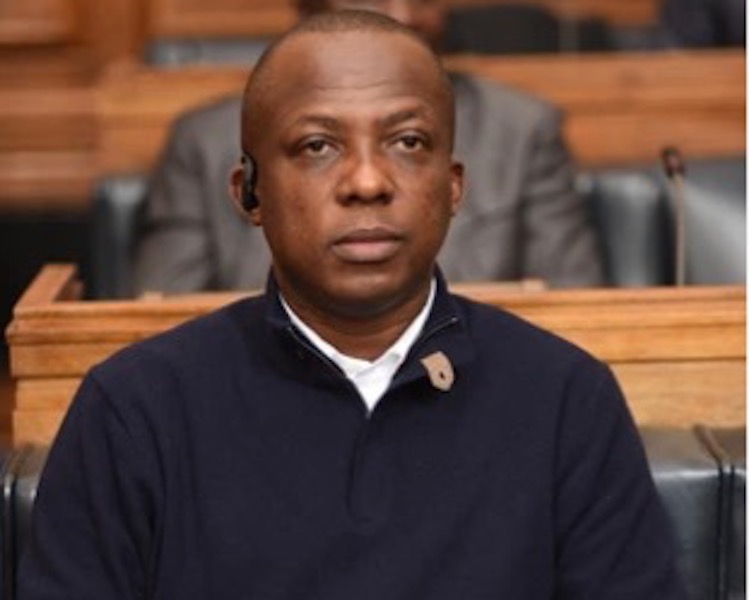
The Lagos State Commissioner for the Environment and Water Resources, Tokunbo Wahab, has dismissed claims that the ongoing Lagos-Calabar Coastal Highway project is responsible for the flooding being experienced in parts of Lekki and Victoria Island. Wahab said the project, rather than worsening flooding, has played a critical role in……
The Lagos State Commissioner for the Environment and Water Resources, Tokunbo Wahab, has dismissed claims that the ongoing Lagos-Calabar Coastal Highway project is responsible for the flooding being experienced in parts of Lekki and Victoria Island.
Wahab said the project, rather than worsening flooding, has played a critical role in protecting the Lekki-Epe Expressway from coastal erosion.
He made the remarks on TVC News’ Beyond the Headline on Tuesday, July 21, while responding to concerns over the impact of the Federal Government’s flagship highway project on Lagos’ drainage system.
Host of the programme, Nigemi Oguntoye, noted that although the Lagos State Government had consistently maintained that the coastal highway did not cause recent flooding, some independent planners argued that the construction may have altered the natural drainage pattern, thereby worsening flooding in Lekki and Victoria Island.
READ ALSO: Building Collapses Go Beyond Government — Lagos Commissioner, Tokunbo Wahab
Responding, Wahab said the alignment for the Lagos-Calabar Coastal Highway had been gazetted years before construction commenced, adding that the Lagos State Ministry of the Environment worked closely with the Federal Government during the planning phase.
“Lekki-Calabar Coastal Highway was gazetted years back, and I know the Federal Government gave the right to the Ministry of Environment and we joined them with respect to that,” he said.
The commissioner described the project as one of the most ambitious infrastructure developments in the region, saying its long-term benefits far outweigh the temporary challenges encountered during construction.
“People may want to shy away from the reality that it is one of the biggest and audacious projects in this part of the world. And we can see the positives,” Wahab said.
He, however, acknowledged that construction activities had resulted in some temporary disruptions to drainage alignments.
“Have we had one or two disruptions with drainage alignment? Yes. Those were structures that were built on developments that were made on the right side of the coastal highway. We have our collectors on that alignment. We gave the Federal Government all the alignments, and I know they used them. But if there are one or two instances of oversight…”
Wahab maintained that the coastal highway has significantly strengthened the state’s resilience against coastal erosion, particularly along the Lekki corridor.
“If not for the construction of the Lagos-Calabar Coastal Highway, the whole of Lekki Expressway would have been gone by now. We wouldn’t have had the Lekki Expressway by today if not for the Lagos-Calabar Coastal Highway.”
He added that the project has served as a protective barrier against the Atlantic Ocean.
“The coastal highway has gone to protect the Lekki-Epe Expressway from being wiped away by coastal erosion,” the commissioner said.