
The Lagos State Government has warned husbands against forcing their wives to have sexual intercourse without consent, stressing that such conduct could result in prosecution and a maximum sentence of life imprisonment.
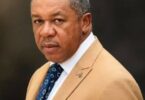
The Press Nigeria reports that the warning was issued by the Director of Public Prosecutions (DPP), Lagos State Ministry of Justice, Dr Babajide Martins, during a press briefing in Lagos on Tuesday to announce the commencement of the state’s Domestic and Sexual Violence Awareness Month, organised by the Domestic and Sexual Violence Agency (DSVA).
Martins gave the clarification while responding to questions on whether a married woman could take legal action against her husband for having sex with her without her consent.
According to the DPP, while Nigerian criminal law does not generally recognise forced sex within an ongoing marriage as rape, the Lagos State Criminal Law provides for the offence of sexual assault by penetration, which carries a maximum penalty of life imprisonment.
He explained that a husband could therefore be prosecuted under the provision if he forcefully has sexual intercourse with his wife after she has expressly refused consent.
Martins said marriage or payment of a bride price does not give a husband the right to subject his wife to domestic or sexual violence.
“Any man who feels that because he paid his wife’s dowry, nobody can challenge him for domestic violence, the wife should report such a man to the Domestic and Sexual Violence Agency,” he said.
The DPP further explained that the law makes a distinction between rape and sexual assault by penetration in marital relationships.
“Under Lagos State criminal law, a man cannot be accused of raping his wife if they are together and are on good terms.
“However, once there is an issue between them and the wife refuses to have sex with him, the husband cannot force her.
“If the husband forces her and the wife reports him, we will not charge him for rape but for sexual assault by penetration, and the punishment is life imprisonment,” he said.
The statement is expected to reignite debate over the legal treatment of non-consensual sex within marriage in Nigeria, particularly the distinction between marital rape and other sexual offences recognised under state laws.
Martins urged victims of domestic and sexual violence not to remain silent, advising women experiencing abuse to report to the Domestic and Sexual Violence Agency for appropriate intervention and legal action.
He also stressed the need for greater awareness and reporting of domestic and sexual violence, particularly in situations where victims may hesitate to speak out because of marital, cultural or family pressures.