Mr Osigwe maintained that he had no constitutional role in conducting the election and therefore could not influence its outcome.
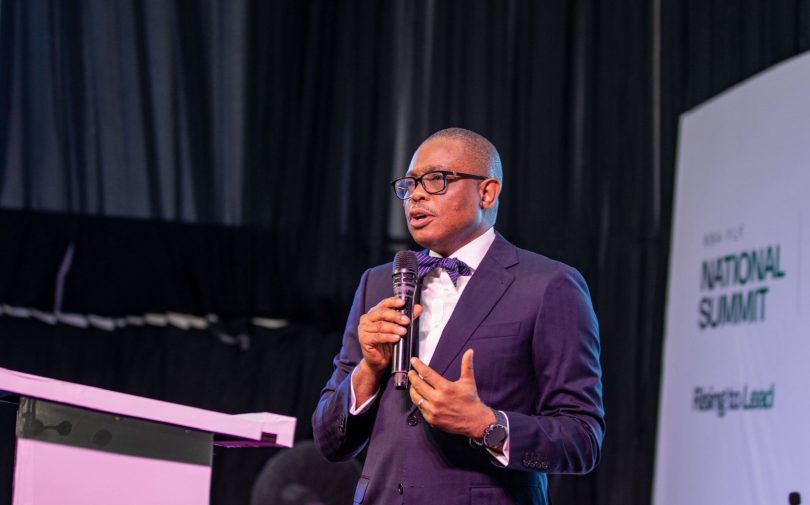
The President of the Nigerian Bar Association (NBA), Afam Osigwe, has denied backing any candidate and interference in the association’s forthcoming national officers’ election.
He said he had not interfered with the electoral process or used his office to favour any aspirant. He added that the NBA constitution guarantees the independence of the Electoral Committee of the Nigerian Bar Association (ECNBA).
ECNBA is the independent body established under the NBA constitution to conduct the association’s national elections
Mr Osigwe made the clarifications during an interview on Politics Today, a Channels Television programme, on Wednesday, when he also explained why the NBA accepted membership of the Presidential Working Group on the National Policing Bill.
Fielding questions on the allegations that he was backing a preferred successor in the election, Mr Osigwe noted that he had “absolutely nothing to do with the electoral process.”
So, whether I have a favourite or not is immaterial,” Mr Osigwe said.
He maintained that he had no constitutional role in conducting the election and therefore could not influence its outcome.
The upcoming NBA election has generated controversy, with some lawyers and online reports alleging that Mr Osigwe was attempting to influence the succession process by backing a preferred candidate, an allegation described as an attempt to secure a “third term by proxy” or entrench a “godfather system” within the association.
Rejecting the allegations, Mr Osigwe said the controversy arose from remarks he made at an NBA meeting, where he said he would “not be neutral” on election day.
According to him, he was referring to his constitutional right to vote for candidates of his choice, not to endorse or campaign for any aspirant.
“I said I was going to cast votes for people. Of course if I’m going to vote; that means I have to vote for people. I have to choose among the contending persons,” the NBA president described his intentions, challenging his critics to point to any action showing that he had used his office to influence the election.
“The question anybody should ask is: Have I abused my office to make it difficult for any person to campaign? Or to aid another person? The answer is absolutely no.”
“The NBA Constitution makes the ECNBA independent. I have not interfered with what they are doing. I have had nothing to do with them.”
The interview came days after the NBA rejected claims that Attorney General of the Federation Lateef Fagbemi, a Senior Advocate of Nigeria SAN, sought to stop the association’s national officers’ election.
PREMIUM TIMES reported on Tuesday that the NBA rejected alleged directives attributed to the AGF seeking to postpone the election.
The association said the alleged directives, contained in a document circulated online, purportedly sought the disbandment of the ECNBA, postponement of the election, replacement of the election service provider, appointment of a caretaker committee, introduction of National Identification Number verification for voters and amendments to the NBA Constitution.
However, the NBA maintained that only its National Executive Council (NEC) has the constitutional power to postpone the election. It also insisted that the ECNBA, an independent body established under the NBA Constitution, would continue with the electoral process as scheduled.
The election is scheduled for 20 July. Eligible members will vote electronically to elect a new president, other national officers and the NBA’s representatives on the General Council of the Bar.
Mr Osigwe also during the interview while answering questions related to the Nigeria current push for state police explained why the NBA accepted membership of the Presidential Working Group on the National Policing Bill. He noted the association had a responsibility to help develop legal safeguards for the proposed state police system.
According to him, the NBA had “nothing against the government per se” but wanted “a government that respects the rule of law and does the right thing.”
He said the NBA would “continue to engage the government on policies aimed at strengthening governance and national security,” as constructive engagement was consistent with the association’s role.
However, Mr Osigwe said the association could not decline an opportunity to contribute to legislation designed to strengthen policing and address public concerns.
“If in this process the NBA has been given an opportunity to contribute to drafting laws that will ensure that these fears are addressed, that will enact laws that will make a better policing system in Nigeria, the NBA cannot run away from that.
“We may criticise, but we should be willing to also constructively engage and contribute to building a better society.”
Mr Osigwe said there was initially “an aversion” to the creation of state police because many Nigerians feared state governors would abuse the system and turn state-controlled police into “an official tool of oppression.”
He, however, said the country’s worsening security situation had changed public opinion, with many Nigerians now supporting a decentralised policing structure.
“But then, with the worsening state of insecurity in some parts of Nigeria, most Nigerians now agree that the national police system cannot work, that there is a need for a state police.”
He added that creating state police must go hand in hand with constitutional safeguards capable of preventing abuse.
“In having it, to address the fears which in the first place made it difficult for us to have state police, we have to ensure that the right constitutional structures are put in place.”
PREMIUM TIMES reported that the campaign for state police gained renewed momentum in recent years following persistent insecurity across the country, including banditry, kidnapping, terrorism and other violent crimes, which many stakeholders say have exposed the limitations of Nigeria’s centralised policing system.