
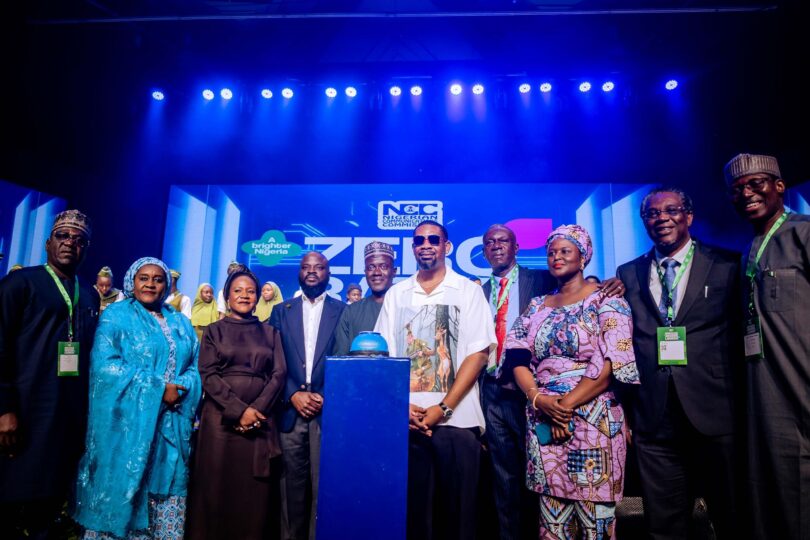
The Nigerian Communications Commission (NCC) has formally launched its Zero-Rated Access to Educational Platforms and Content Initiative, marking the culmination of a policy drive to remove the cost of data as a barrier between millions of young Nigerians and digital learning.
From October 1, 2026, the initiative will initially provide approximately five million eligible students with 100MB of zero-rated data daily, enabling them to access approved educational websites, digital libraries and learning platforms without the data consumed on those platforms being charged against their regular data balances.
The first phase will focus on learners in public senior secondary schools and public tertiary institutions.
The launch represents a significant milestone in an initiative championed by the Chairman of the NCC Board, Chief Idris Ibikunle Olorunnimbe, who earlier this year called on telecommunications operators to make credible educational platforms accessible without data charges as an urgent intervention in Nigeria’s education and digital inclusion challenge.
In March, following an engagement with the Association of Licensed Telecommunications Operators of Nigeria (ALTON), Olorunnimbe publicly made the case for zero-rated learning, arguing that the cost of data had effectively become another barrier to educational opportunity for millions of Nigerian families.
He subsequently wrote that, “The NCC is ready to lead. I am honoured to drive this work, but the vision we are executing belongs to President Bola Tinubu.”
The Chairman has consistently situated the initiative within President Bola Ahmed Tinubu’s Renewed Hope Agenda, particularly its emphasis on human capital development, digital inclusion and widening opportunity for young Nigerians.
His argument has been that, in a digital age, access to educational content should increasingly be treated as an essential enabler of opportunity, particularly for children whose families cannot routinely afford the data required to learn online.
That original policy call was followed by months of technical engagement by the Commission and consultations involving telecommunications operators, the Federal Ministry of Education, technology and education providers, development partners, students and other stakeholders.
In July, the NCC convened a public consultation on the proposed framework to examine implementation models, eligibility, sustainability, competition, consumer protection and the appropriate safeguards for the programme.
At Thursday’s launch, the partnership between the NCC Board’s strategic leadership and the Commission’s management was brought into focus during a fireside conversation between Olorunnimbe and the Executive Vice Chairman and Chief Executive Officer of the NCC, Dr Aminu Maida, under the theme “Activating a Vision.”
The session formed a central part of the programme and focused attention on the movement of the initiative from an idea into a practical, scalable intervention.
Maida emphasised that the policy should be understood not simply as a telecommunications intervention but as an investment in knowledge and human capacity.
“It is not about providing connectivity; it is about giving people connectivity to gain knowledge,” the EVC said.
He explained that access to knowledge creates a foundation for innovation, productivity and economic growth and stressed that the impact of zero-rated education would be greatest among Nigerians for whom the cost of regular internet access remains prohibitive.
The EVC also placed the initiative within the NCC’s wider push to improve the reach and quality of Nigeria’s telecommunications infrastructure.
He disclosed that operators had committed to upgrading approximately 12,000 network sites in 2026, with about 70 per cent already completed, while the Commission continues to prioritise connectivity in unserved and underserved communities.
Every newly connected community, he noted, expands the number of Nigerians able to benefit from digital education.
The Honourable Minister of Education, Dr Tunji Alausa, announced that access under the new framework would commence on October 1.
He described affordability as one of the most significant barriers to digital learning and said the initiative would initially target senior secondary and tertiary students before progressively expanding to other categories of learners.
According to the Ministry of Education, providing 100MB daily to five million students represents approximately 15 billion megabytes of educational data every month, with an estimated annual data value of N180 billion.
This represents the estimated value of the connectivity being made available to learners rather than a cash payment to beneficiaries.
Importantly, the initiative does not provide unrestricted free internet browsing.
The zero-rated allowance will apply specifically to educational websites and platforms approved under the framework.
The Federal Ministry of Education and the NCC will work together on the platforms to be whitelisted, including learning management systems, digital libraries, educational repositories, teacher-development resources, and technical and vocational learning platforms.
The framework also incorporates safeguards covering cybersecurity, data protection, consumer and child protection, net neutrality, fair competition and inclusivity, ensuring that the drive to expand access is accompanied by appropriate protections for learners and the integrity of Nigeria’s telecommunications ecosystem.
The Minister of Communications, Innovation and Digital Economy, Dr Bosun Tijani, represented at the event by the Director of the National Frequency Management Council Secretariat, Engr. Adeyemo Adetunji Olugbenga, reaffirmed the Ministry’s support for programmes that expand digital inclusion, affordable connectivity and access to knowledge.
A high-level panel themed “Bridging the Digital Learning Gap: The Power of Collaboration” brought together ALTON Chairman Engr. Gbenga Adebayo; Chair of the Implementation Committee, Dr Shafii Ndanusa; Dr Abubakar Isah of the Federal Ministry of Education; Miva Open University Vice Chancellor Prof. Tayo Arulogun; FlexiSAF CEO Faiz Bashir; and a representative of the National Association of Nigerian Students.
The significance of the initiative was also reflected in the presence of prominent figures from Nigeria’s entertainment, media and creative industries, underscoring the importance of taking the message of digital learning beyond traditional government and telecommunications audiences.
Among those in attendance were music executive Don Jazzy, singer Reekado Banks, Amara Kanu, media personality Mimi Onalaja and comedian David Makinde.
Award-winning singer Teni the Entertainer delivered a goodwill message at the event.
Their participation brought a powerful youth and popular-culture dimension to an initiative whose primary beneficiaries will be millions of young Nigerians.
The formal launch was undertaken by representatives of the Federal Ministries of Communications, Innovation and Digital Economy and Education alongside Olorunnimbe, Maida and NCC Board Commissioner Princess Oforitsenere Emiko, reflecting the cross-government and institutional collaboration behind the programme.
NCC Executive Commissioner for Technical Services, Engr. Abraham Oshadami, thanked the telecommunications operators supporting implementation, with MTN Nigeria, Airtel Nigeria and Globacom among operators identified as participating in the initiative.
For the NCC Chairman, the launch represents the transition from advocacy to measurable delivery. His original proposition was simple: if technology is increasingly where knowledge resides, inability to afford data should not determine which Nigerian child can reach that knowledge.
For the Commission, the next phase will therefore be defined by implementation, expansion and impact: ensuring that eligible students can actually access the approved platforms, extending connectivity into underserved communities, broadening the range of useful educational content and working with operators and education stakeholders to make the intervention sustainable.
The Zero-Rated Access to Educational Platforms and Content Initiative is expected to commence nationwide on October 1, 2026.