… APM Presidential Candidate Unveils Manifesto
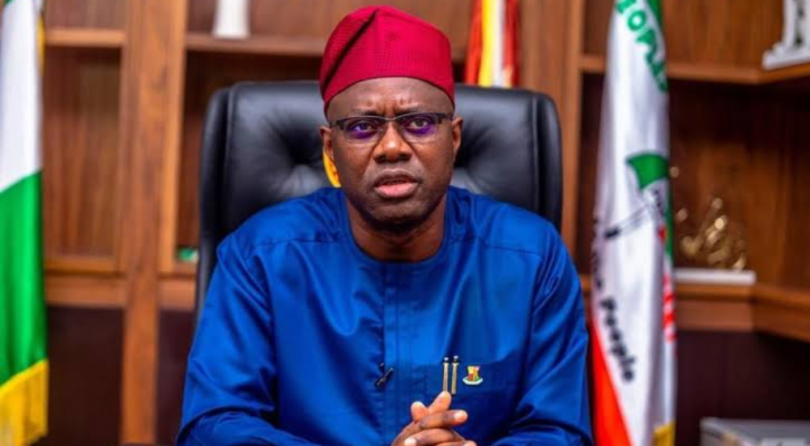
The presidential candidate of the Allied Peoples Movement (APM), Seyi Makinde, has accused Nigeria’s political leadership of failing to translate the country’s abundant natural and human resources into prosperity, saying the nation is rich in resources but poor in ideas.
Makinde, who spoke on Wednesday in Abuja while unveiling his party’s manifesto, said Nigeria’s development challenges were rooted in poor leadership, weak institutions and policies that prioritise macroeconomic figures over the welfare of ordinary citizens.
“Nigeria has the resources and the capacity to achieve greatness. Nigeria is rich in natural resources and human resources, but our leaders are poor in ideas,” he said.
The governor of Oyo State said his proposed Reset Agenda was informed by consultations and town hall meetings across the six geopolitical zones, where Nigerians shared their expectations and concerns about the country’s future.
He identified four fundamental issues driving his presidential ambition: the neglect of broad-based economic growth in pursuit of macroeconomic reforms, lack of government accountability, dysfunctional institutions and the exclusion of millions of poor Nigerians from policy decisions.
According to him, economic reforms must translate into affordable food, job creation, improved incomes and a lower cost of living, rather than being celebrated through economic statistics that have little impact on households.
“Macroeconomic stability must have a direct impact on the people through job creation, improved incomes and a lower cost of living,” he said, adding that government must take responsibility for both its achievements and failures.
On the economy, Makinde said his administration would focus on reducing the structural cost of living by lowering production costs, improving electricity supply and creating a more competitive operating environment for businesses.
He lamented that manufacturers relying on diesel-powered generators were being burdened with high production costs, forcing some businesses to relocate to neighbouring countries.
The opposition candidate also questioned why Nigerians should continue to bear the burden of rising international crude oil prices without benefiting from increased government revenues.
Makinde proposed a transparent system that would ensure additional oil earnings above the budget benchmark translated into tangible benefits for citizens.
On electricity, the APM candidate faulted the Federal Government for shifting responsibility to state governments despite retaining control of critical national electricity assets. He promised to accelerate reforms in the sector, insisting that government must be held accountable for its pledge to provide reliable power.
He also proposed constitutional and political reforms, including a requirement that presidential candidates secure at least 50 per cent plus one of the votes to win, arguing that this would encourage consensus-building across political, ethnic and religious divides.
Makinde advocated a transitional government of national unity and declared that he would not personally benefit from any constitutional or political arrangements introduced under the proposed reforms.
He said his administration would operate on measurable targets, with clear performance benchmarks beginning within its first 100 days, while urging Nigerians to scrutinise the Reset Agenda and hold political leaders accountable for their promises.
“We will tell Nigerians the truth. We will not make empty promises or engage in political theatrics. If we fail, Nigerians should hold us accountable,” he said.