
…Says Price Discount Won’t Increase Petrol Smuggling
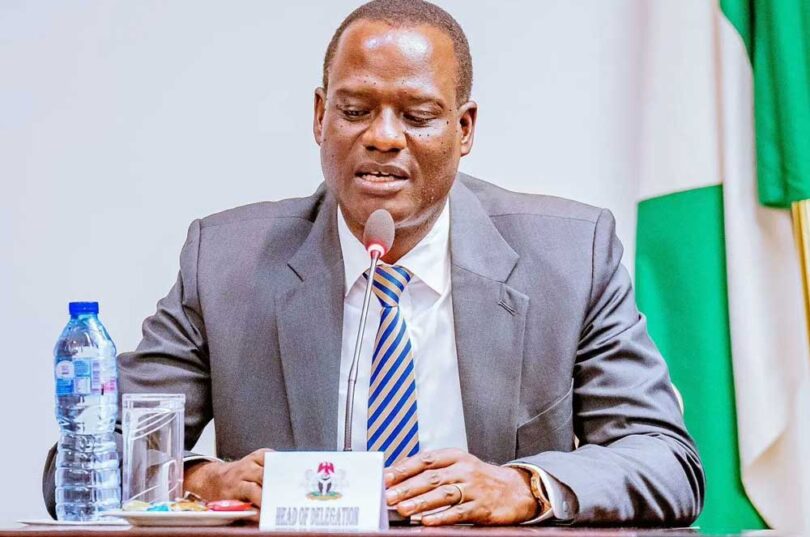
The Minister of Finance and Coordinating Minister of the Economy, Taiwo Oyedele, has said the petrol price discount introduced by the Nigerian National Petroleum Company (NNPC) Retail Limited is not expected to reduce dividends paid to the Federation Account, arguing that increased sales volumes could offset lower profit margins.
Oyedele said the initiative, which took effect on October 1, 2026, was a commercial decision by NNPC Retail to reduce its retail margin and pass the savings to consumers without using public funds.
In a statement issued by the Federal Ministry of Finance on Friday, the minister dismissed concerns that the discount could hurt the profitability of NNPC Retail and, consequently, reduce the dividends accruing to the Federation.
He explained that although the company might earn less on each litre of petrol sold during the discount period, higher sales volumes and increased customer loyalty could compensate for the reduction in its margins.
“A smaller margin or temporary zero margin on each litre can be more than offset by selling more litres over time,” Oyedele said.
He added that the discount could strengthen the company’s market position and improve its earnings over time.
“And a discount builds customer loyalty that lasts well beyond the discount period itself. Together, these can raise NNPC Retail’s profits, and the dividends paid to the Federation: a win-win for consumers and for government,” he said.
The minister’s remarks come amid renewed public debate over the Federal Government’s decision to offer a 30-day petrol discount at NNPC Retail filling stations as part of measures to cushion the impact of rising fuel prices on households and businesses.
The discount involves NNPC Retail reducing or temporarily foregoing its retail margin, allowing it to sell petrol at a lower price to consumers.
Oyedele, however, insisted that the arrangement should not be interpreted as a return to the petrol subsidy regime abolished by the Federal Government in May 2023.
He said the fundamental difference between a subsidy and the current discount was the source of funding.
According to him, a subsidy involves the government using public revenue to pay part of the cost of fuel, while a retail discount is funded by the seller accepting a lower profit margin.
“The cost of the discount is borne by the retailer alone,” he said.
Oyedele explained that NNPC Retail purchases petrol from the Dangote Refinery and other suppliers at market prices before adding its retail margin to determine the pump price.
He said the discount was being financed entirely from the company’s retail margin and was not funded by the Federal Government’s budget or the Federation Account.
Consequently, he maintained that the discounted pump price remained market-reflective and did not amount to a government-funded subsidy.
The minister also distinguished the arrangement from the sale of crude oil belonging to the Federation below market prices, which he said would constitute a subsidy because the resulting shortfall would ultimately be borne by public revenue.
Oyedele said NNPC Retail’s decision was consistent with its mandate to ensure the nationwide availability, distribution and affordability of refined petroleum products.
He noted that the company, a wholly owned subsidiary of NNPC Limited, was established more than 20 years ago as a petroleum marketing and retail business.
According to him, its role extends beyond maximising retail profits to ensuring that petroleum products remain accessible to consumers across the country.
He added that NNPC Retail had historically sold petrol at prices below those of other marketers, describing the current discount as a continuation of that commercial role.
The minister also dismissed concerns that the discount could distort Nigeria’s downstream petroleum market or encourage cross-border smuggling.
He said the retail margin on petrol accounted for less than five per cent of the pump price, limiting the extent to which a reduction in the margin could widen the price gap between Nigeria and neighbouring countries.
Oyedele noted that petrol prices in neighbouring countries were already between 20 and 40 per cent higher than in Nigeria.
He argued that the discount was therefore unlikely to create a significant additional incentive for smugglers or produce the market distortions associated with previous subsidy arrangements.
Acknowledging the continued pressure of fuel prices on households and businesses, the minister said the discount was one of several measures being pursued by the Federal Government to ease the burden on Nigerians.
Other measures include expanding compressed natural gas (CNG) transportation, waiving taxes and duties on petrol, and removing illegal levies that contribute to higher transportation and logistics costs.
He said the measures were designed to provide relief to consumers without returning the country to a subsidy regime that the government considers financially unsustainable.
The debate over the discount comes as the government seeks to balance consumer relief with the need to maintain market-based petroleum pricing following the removal of fuel subsidies.
While the arrangement is expected to reduce petrol prices at participating NNPC Retail stations during the discount period, its ultimate effect on the company’s earnings and dividend payments will depend on sales volumes, operating costs and the extent to which increased patronage offsets the lower margins.