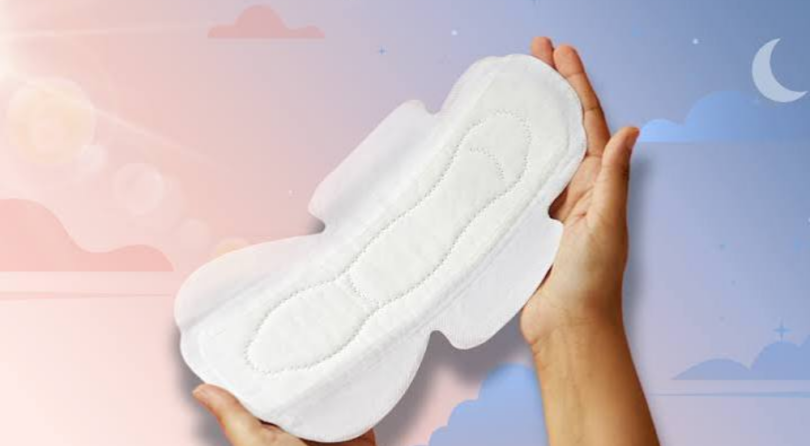
… Gynaecologist Reveals Other Causes Of Similar Symptoms
What should be a routine part of menstrual hygiene has become a source of discomfort for some Nigerian women, who report itching, burns, rashes and blisters after using sanitary pads.
One of them is Abigail Sally, a 23-year-old hair stylist in Abuja, who told THE WHISTLER that her monthly menstrual cycle is regularly accompanied by itching, burning sensations and skin irritation. Although she suspects a sanitary pad brand she regularly uses is responsible, its affordability has made it difficult for her to switch to another product.
She also described instances when the skin around the affected area becomes whitish and begins to peel.
“I started noticing the discomfort when I began using a named sanitary product (name withheld by THE WHISTLER). I usually experience itching around my private area on the third day of my menstrual cycle.
“I also experienced a burning sensation, rashes and irritation. Sometimes, the skin around the area becomes whitish and starts peeling off. It is an uncomfortable experience, and it has given me much concern about the product I use during my cycle,” Sally told THE WHISTLER.
Despite the symptoms, Sally said she had continued using the product because it was affordable and absorbed better than some alternatives she had tried.
Her experience is among several accounts shared by Nigerian women who spoke to THE WHISTLER about discomfort associated with sanitary pads, following renewed concerns on social media over the safety of menstrual hygiene products sold in the country.
The women reported varying symptoms, including itching, burning sensations, rashes, dry skin and blisters. Some said they had switched brands or resorted to alternative menstrual protection methods in an attempt to manage the discomfort.
Their accounts come amid online claims that some sanitary pads contain potentially harmful chemicals, raising questions about the safety of products used by millions of women during their menstrual periods.
For Benita Samson, a real estate marketer, the discomfort became severe enough to make her change the brands she used.
She said she had experienced burns and irritation around her private area while using sanitary pads, forcing her to switch between products.
Samson also said she had come across complaints about similar discomfort associated with different brands.
“Yes, I do get burns and irritations on my private area during my cycle. I had to change pad brand. I have also seen people complain literally in all brands,” she said.
Another respondent, who gave her name only as Ifeoluwa, said she regularly experienced what she described as pad burns, dry skin and vaginal itching during and after her menstrual period.
She said she applied shea butter to the skin around her buttocks and bikini area before wearing a sanitary pad in an attempt to prevent irritation.
“I always have pad burns, dry skin and itchy vagina during and after using pad. During my period, I use shea butter on my bottom skin and Bikini area before wearing the pad and pray it works,” Ifeoluwa said.
Another woman said her experience with a particular sanitary pad prompted her to stop using it.
She recounted that she began experiencing itching around her private area on the first day she used the product, whose name was withheld by THE WHISTLER. By the second day, she said, blisters had appeared across the affected area.
She said she had regularly used the brand before the sudden reaction. After making inquiries about her symptoms, she was told the blisters could have resulted from irritation associated with the pad. She has since stopped using the product.
Hassana Ladi, however, said she had experienced irritation while using different sanitary pad brands.
She said the discomfort had become worrying enough to make her explore alternatives, including cotton wool and a large disposable absorbent underwear product.
Ladi also mentioned complaints on TikTok and other social media platforms, where women have shared similar experiences of irritation and discomfort associated with sanitary pads. However, she acknowledged that such complaints did not, on their own, establish that the products contained harmful chemicals.
The women admitted during interviews with our reporter that they had not sought medical attention.
A gynaecologist who spoke with THE WHISTLER cautioned against attributing the symptoms to products without medical investigations.
Dr Ogbonna Ojukwu said skin reactions experienced by some women following the use of sanitary pads might not necessarily be caused by the quality of the products, as allergies and vaginal infections could also trigger similar symptoms.
Ojukwu said establishing a direct link between the reported symptoms and sanitary pads would require proper investigations. He explained that women could develop allergic reactions to different synthetic materials, including substances used in manufacturing sanitary pads.
He said, “Women can react to anything. Women can be allergic to even ordinary brassieres. They can be allergic to the synthetic agents used in producing those brassieres. They can be allergic to synthetic substances used in producing sanitary pads.”
The gynaecologist further explained that certain vaginal infections could also cause itching and discomfort, making it difficult to conclude that sanitary pads were responsible for the complaints.
He mentioned candidiasis and trichomoniasis as infections that could produce similar symptoms.
“Apart from that, there are some diseases a woman can have and you have itchiness like candidiasis, like trichomonas vaginalis. So, it’s difficult to pin it down on the sanitary pad alone as a reason why women itch or why women have issues when they wear a pad,” he said.
Ojukwu also said he had not personally received complaints from patients about reactions to sanitary pads.
He, however, referred questions about the chemicals and materials used in manufacturing the products to the National Agency for Food and Drug Administration and Control (NAFDAC), saying the regulator was better positioned to investigate the concerns.
“For me, I don’t think anyone has come to me complaining about sanitary pad issues. But all the same, NAFDAC will be in a better position to respond to your questions,” he added.
In October, NAFDAC announced that it had commenced investigations into the safety of disposable sanitary pads following concerns about the alleged presence of potentially harmful chemicals in some products.