
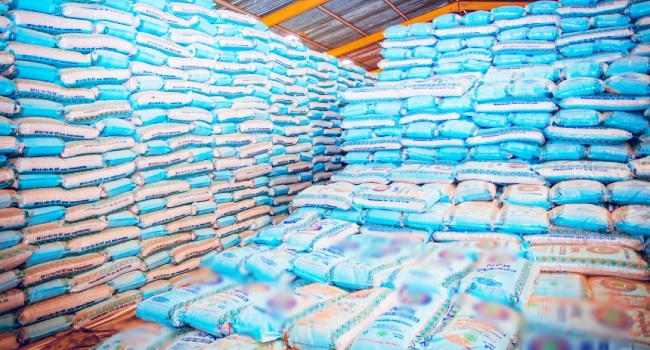
The Federal Government has launched the South-East phase of the Renewed Hope Farm Input Support Programme (FISP), with the distribution of 80,640 bags of fertiliser to 20,160 registered smallholder farmers across Imo, Enugu, Anambra and Ebonyi states.
The intervention, implemented by the National Agricultural Development Fund (NADF), began on Monday at Ndubuisi Kanu (Heroes) Square, Owerri, in Imo State.
It is aimed at boosting food production, supporting smallholder farmers and strengthening food security ahead of the 2026 wet farming season.
Speaking at the launch, the Executive Secretary and Chief Executive Officer of NADF, Mr. Mohammed Ibrahim, represented by the Fund’s General Manager, Technical Services, Mr. Ernest Ihedigbo, said the programme was designed to bridge critical farm input gaps, improve agricultural productivity and build the resilience of farmers.
READ ALSO: Kano Commences Distribution Of 90,000 Bags Of Fertiliser To Farmers
He disclosed that 20,160 smallholder farmers across the four participating states would each receive fertiliser grants under the scheme.
According to Ibrahim, the programme also supports indigenous fertiliser manufacturers, creating stronger linkages across Nigeria’s agricultural value chain while driving rural economic development.
“The Farm Input Support Programme is a home-grown agricultural intervention that addresses the needs of smallholder farmers while supporting local fertiliser production, creating jobs and strengthening food security,” he said.
He explained that the initiative is anchored on three strategic objectives: stabilising food prices through targeted input support, increasing agricultural productivity by closing input gaps, and strengthening value chain linkages to accelerate agro-economic growth.
Ibrahim reaffirmed NADF’s commitment to working with state governments and development partners to unlock the agricultural potential of the South-East and promote sustainable investment in the sector.
Representing the Minister of Agriculture and Food Security, Senator Abubakar Kyari, senior special adviser to the Minister, Ibrahim Tanimu, described the programme as a strategic investment in Nigeria’s drive towards food self-sufficiency.
He said the intervention reflects the Federal Government’s commitment to lowering production costs and increasing crop yields through direct support to farmers.
Tanimu noted that the Memorandum of Understanding signed by the Imo State Government, the All Farmers Association of Nigeria (AFAN) and NADF would ensure transparency and accountability in the distribution process.
Representing Governor Hope Uzodimma, the Deputy Governor of Imo State, Chinyere Ekomaru, described the initiative as a major milestone for agricultural development in the South-East.
She urged beneficiaries to utilise the fertilisers for farming rather than diverting them, stressing that the programme would improve harvests, create jobs and strengthen rural livelihoods.
“We are planting more than fertilisers today; we are planting food security, jobs and a better future for the South-East,” she said.
Also speaking, the National President of AFAN, Mohammed Magaji, commended the Federal Government and NADF for launching the programme at the onset of the planting season.
He said timely access to quality farm inputs would reduce production costs, increase crop yields and improve the profitability of smallholder farming.
Magaji also praised the adoption of a transparent, data-driven beneficiary selection process, saying it would ensure that support reaches genuine farmers.
He further commended the Imo State Government for its investments in agricultural infrastructure, agribusiness development, youth empowerment and rural roads, which he said are vital to strengthening agricultural value chains.
The Renewed Hope Farm Input Support Programme is one of the Federal Government’s flagship agricultural interventions and is designed to support smallholder farmers, stimulate local fertiliser production, strengthen rural economies and advance Nigeria’s food security objectives.