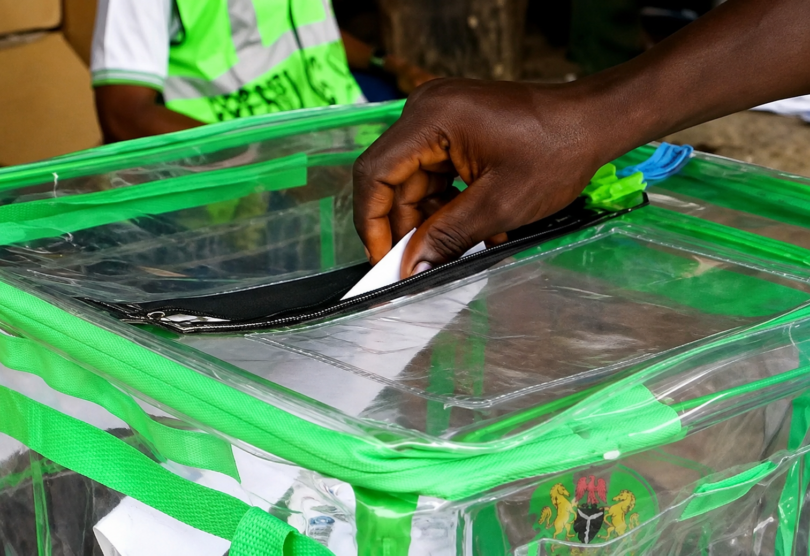
The findings suggest that many young Nigerians are not necessarily indifferent to elections; rather, they are becoming disillusioned by an electoral process they believe is neither transparent nor capable of translating their votes into meaningful change.
Ahead of the 2023 election, Prodigy Dan, a young Nigerian, believed that high voter turnout would bring the good governance the country desperately needed. So, he encouraged his friends to register for their Permanent Voter Cards (PVCs), which were required to vote.
“With how everything emerged in the last election, I feel like there’s one side of me that really doesn’t want to vote (again), because at the end of the day, it might not just count,” he told Campus Reporter.
This reluctance to vote is widespread among Nigerian undergraduates, a Campus Reporter survey found.
The Campus Reporter youth participation report surveyed 222 university students across 34 institutions and found that 52.1 per cent of participants were not registered to vote.
The survey conducted weeks before the initial deadline for the voter registration exercise also found that 59 per cent of respondents aged 18 to 21 had not registered to vote.
The study identified a lack of transparency in elections, stringent registration procedures, and limited youth representation in politics as issues affecting young people’s participation.
The single biggest factor identified by 31 per cent of respondents as likely to encourage them to vote was “greater transparency”.
Other top factors cited by respondents include an easier voter registration process, greater youth representation in politics, improved voter education, and reduced election violence.
The findings suggest that many young Nigerians are not necessarily indifferent to elections; rather, they are disillusioned by an electoral process they believe is neither transparent nor capable of translating their votes into meaningful change.
Emmanuella Balogun, a student at Kwara State University (KWASU), turned 18 earlier this year, when voter registration was still ongoing. But she did not register to vote because she does not trust the electoral commission to conduct transparent elections.
The student said she has observed the prevalence of corruption in previous elections and no longer trusts the process.
“I think my vote is very important in influencing decisions that affect other young people and me. I just don’t think it is acknowledged here in Nigeria,” she said.
Glory Eze, in her mid-twenties, did not vote in the previous elections. Ms Eze describes electoral violence and the failure of elections to translate into good governance as her reasons for not voting.
“People vote, and then nothing changes, and the fact that people go out to vote and are injured. They’re not secure going out to vote,” she said.
Kemisola Aboluwade, who is in her late twenties, said she had also become disillusioned because elected representatives often fail to fulfil their campaign promises.
“It’s so sad that year in, year out, things are getting worse because expectations are not being fulfilled,” Ms Aboluwade said.
Nurudeen Akewushola, a senior journalist at the ICIR, explained that disputes over the 2023 elections discouraged many young people from participating in future elections.
“People expected that they would be seeing the results as they were counting the votes in real time during the 2023 elections,” Mr Akewushola said.
Amina Miango, the Programme Manager of the Accountability Programme at the Centre for Journalism Innovation and Development (CJID), said that young Nigerians do not trust the electoral process.
“Young people have a suspicious view of the electoral process. They have a bad image of what INEC, the judiciary, and the police stand for, and those are major institutions in any election,” she said.
But Ms Miango stressed that young Nigerians need to be deliberate about playing their part in the elections.
“Young people themselves need to take responsibility,” she said. “If you have registered, take steps to get your PVC when it becomes available. Pay attention to when election day is, listen to the issues and educate yourself about the electoral process.”
Corroborating Ms Miango’s thoughts, the Executive Director of Enough is Enough (EIE) Nigeria, Ufuoma Nnamdi-Udeh, advised young Nigerians not to refrain from participating in elections because of their experiences in previous polls.
“When your preferred candidate does not win, it does not mean you disengage from the process. It is engaging the process that makes it better,” she said.
Ms Nnamdi-Udeh also encouraged young Nigerians to actively seek political power and get into rooms where decisions are made post-elections, rather than passively waiting for current leaders to hand power to them.
“We (youths) live longest with the consequences of bad leadership and bad governance in Nigeria…If you love your life, I think that you should collect your PVC and then come out for elections as well,” she added.
“Politics is expensive, but young people can pool resources to support candidates who demonstrate competence and capacity.”
Nigeria’s elections are usually fraught with irregularities that leave voters unsatisfied that their votes counted. The last general election, for instance, witnessed several challenges.
Ahead of the election, the Independent National Electoral Commission (INEC) introduced new technologies that raised voters’ hopes about the credibility and transparency of the election results. However, controversies over the Bimodal Voter Accreditation System (BVAS) and the INEC Results Viewing (IREV) portal undermined many voters’ confidence in the electoral process.