
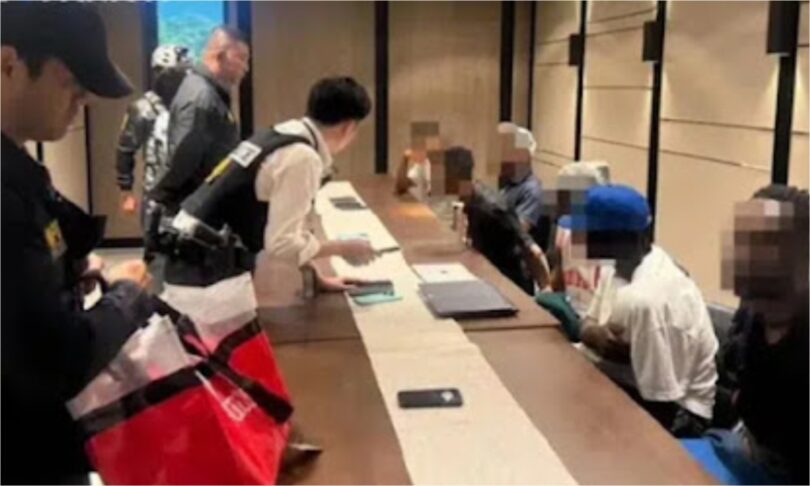
Thai authorities have arrested six Nigerian nationals allegedly linked to an AI-driven romance scam network operating from a luxury condominium in Nonthaburi as part of an investigation that originated from a cocaine trafficking case.
The arrests were carried out during coordinated raids on May 22 at three apartments located near Phra Nangklao Bridge along the Chao Phraya River. Police said the suspects lived in groups within the condominium and allegedly used fabricated identities, AI-generated images and fake video calls to defraud victims, mainly elderly Thai women.
According to investigators, the operation began in April after a Nigerian man identified as Patrick and three other suspects were arrested over alleged cocaine trafficking. During the earlier raid, authorities reportedly confiscated assets estimated at 2.5 million baht.
Police said financial records linked to the narcotics investigation later led investigators to several foreign nationals residing in the high-end condominium complex under student visas. Authorities claimed none of the suspects was actually attending school or engaged in lawful employment.
Details of the operation surfaced in a viral video posted on X by Cambodia-based crime researcher Jacob Sims, who uses the handle @jacobincambodia.
Armed with search warrants, officers stormed the apartments after the occupants allegedly refused to grant them access. One suspect reportedly attempted to escape through a balcony, while another was found hiding in a bathroom and allegedly sending warning messages to others in nearby apartments.
During the searches, police recovered 18 mobile phones, three laptops and three bank passbooks. Investigators disclosed that some of the devices were still logged into ongoing conversations with suspected scam victims.
Authorities alleged that the syndicate created online profiles posing as pilots, doctors, engineers and United States military officers to establish romantic relationships with women. Victims were later told that valuable parcels had been seized by customs officials and that money was needed to secure their release.
Police also claimed to have discovered AI-generated photographs of Western-looking individuals allegedly used during deceptive video calls, alongside prepared scripts intended to manipulate victims into sending funds.