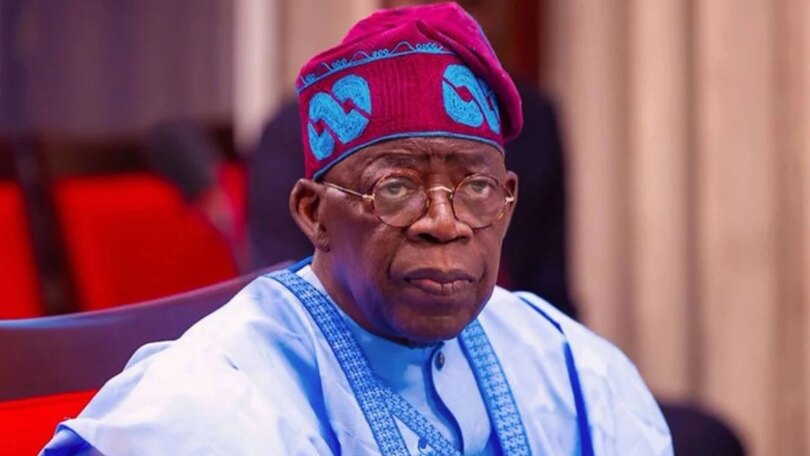
President Bola Ahmed Tinubu’s records linked to an old United States investigation will eventually be made public, although substantial portions may be redacted, Special Counsel to Nnamdi Kanu, Aloy Ejimakor, has said.
Ejimakor, who represents the detained leader of the Indigenous People of Biafra, IPOB, made the prediction on Tuesday.
The lawyer reacted to the latest development in the long-running Freedom of Information Act, FOIA, case involving records connected to Tinubu.
His comment came after a US federal court allowed the Federal Bureau of Investigation, FBI, to present sensitive information to the court privately.
The move is part of the legal battle over whether records relating to Tinubu’s alleged involvement in a 1990s drug-trafficking investigation should be released.
The FBI had asked US District Judge Beryl Howell for permission to submit an explanation under seal and outside the presence of the parties.
The agency said a full public explanation of its position could expose sensitive law-enforcement methods or put individuals at risk.
Ejimakor, however, believes the latest development does not mean the records will remain permanently hidden.
In a statement titled, “Analysing FBI’s stonewall on President Tinubu’s US records,” the lawyer said the material would eventually be disclosed, although some parts could be withheld.
“My prediction: In the end, Tinubu’s records will be disclosed, but significant portions will be redacted, hidden from view, leaving only details that will be of little or no political value.”
Politics Nigeria earlier reported that the FBI had requested and asked to explain privately why some of the records should remain protected under US FOIA law.
The agency has relied on several exemptions, including provisions covering personal privacy, confidential sources, investigative methods and information that could potentially endanger an individual.
In particular, the FBI has cited Exemptions 7(E) and 7(F). The first deals with law-enforcement techniques and procedures, while the second permits agencies to withhold information where disclosure could reasonably be expected to endanger the life or physical safety of an individual.
The FBI said it could not place its complete justification on the public record because doing so could reveal the very information it was seeking to protect.
“The FBI has determined that it cannot provide on the public record the full basis for the application of Exemptions 7(E) and 7(F) to certain withholdings and that, therefore, an ex parte, under seal declaration is necessary,” the agency stated.
An ex parte filing allows a party to present information to the judge without making it available to the opposing side. An in-camera review, meanwhile, means the judge examines the material privately.
The court’s decision allows Judge Howell to study the sensitive material and determine whether the FBI has enough legal grounds to keep parts of the records away from the public.
The records are being sought by American businessman and transparency campaigner Aaron Greenspan in a case that has been before the US District Court for the District of Columbia for several years.
One of Greenspan’s requests seeks the “entire FBI file” concerning Tinubu. Another seeks FBI Form 302 interview records involving Tinubu from an investigation covering the period between 1992 and 1993.
Form 302 documents are generally prepared by FBI agents to record information obtained during interviews conducted as part of investigations.
The records are connected to a broader US investigation that has continued to attract political attention in Nigeria because of its links to allegations of drug trafficking and money laundering.
However, the existence of investigative records does not by itself prove that Tinubu committed a criminal offence.
The President has consistently denied wrongdoing, and the old US proceeding involving funds associated with him was a civil forfeiture case rather than a criminal conviction for drug trafficking.
US authorities previously seized funds connected to accounts associated with Tinubu. About $460,000 was eventually forfeited to the US government in a civil proceeding.
The issue has remained controversial because of the political importance of the records and the fact that Tinubu is now Nigeria’s sitting president.
The latest FOIA dispute dates back to requests made by Greenspan, who sought access to records held by US agencies including the FBI and Drug Enforcement Administration, DEA.
The agencies had initially relied on what is known as a “Glomar” response. Such a response allows a government agency, under certain circumstances, to neither confirm nor deny whether requested records exist.
That position was challenged in court.
In April 2025, Judge Howell ruled that the FBI and DEA could not continue relying on the broad Glomar response in relation to the Tinubu records.
She directed the agencies to search for and process records that were not protected from disclosure under FOIA.
The ruling did not order the unconditional release of every document connected to Tinubu.
Instead, the agencies were required to examine the material and release portions that were not covered by lawful exemptions.
That distinction has become important in the latest stage of the case.
The FBI is now asking the court to determine privately whether some of the remaining material falls within the exemptions it has invoked.
Ejimakor said the FBI could rely on concerns about informants, witnesses and law-enforcement personnel when presenting its case to the judge.
According to him, releasing names or identifying information connected to confidential sources could expose them or their relatives to retaliation.
He also said details concerning officers involved in the old investigation could potentially expose them to harassment or physical attacks.
“Identifying law-enforcement personnel whose names appear in the files poses risk of harassment or physical targeting,” Ejimakor said.
He further argued that some operational details could remain sensitive even though the investigation dates back more than three decades.
“Disclosing operational details that, even decades later, could enable retaliation against sources still living or associated with the investigation,” he added.
The lawyer also pointed to the FBI’s request for a private hearing as an indication that the agency believes even its explanation for withholding some information could expose protected material.
“In particular, the FBI’s request for ex parte review underscores the additional issue that public justification itself could compromise these protected interests,” he said.
The FBI is expected to submit its confidential explanation to Judge Howell by August 28, following the court’s latest directive.
In a related development, Politics Nigeria had earlier reported that a US court gave the American authorities a fresh deadline to deal with the Tinubu records after the case had remained pending for more than three years.
The court’s intervention followed repeated efforts by US agencies to delay or restrict access to the documents.
The latest private review does not mean the entire file has been sealed permanently. It also does not amount to a judicial finding that the allegations surrounding Tinubu are true.
Rather, the immediate question before Judge Howell is how much of the requested material can lawfully be released and what portions, if any, must remain protected under US law.