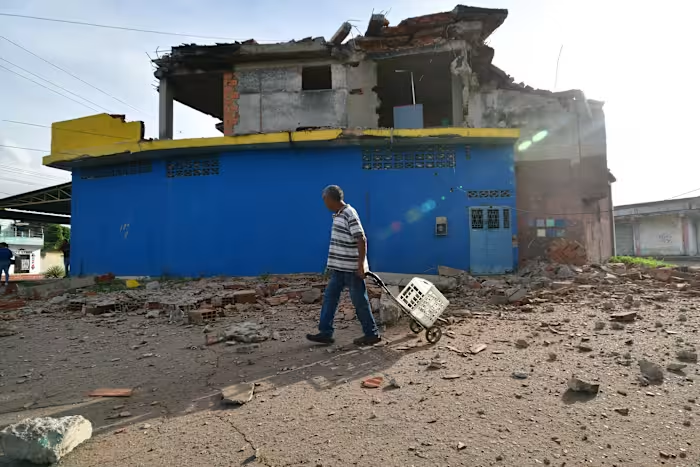
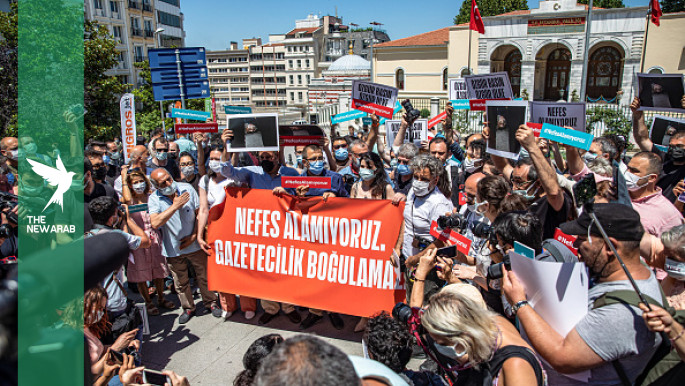
Turkey ranks among the lowest countries for press freedom globally [Getty/file photo]
Dozens of Turkish journalists have been denied accreditation for a NATO summit in the Turkish capital Ankara next month, media outlets and journalist associations said on Thursday, with NATO saying it relied on Turkey for guidance about journalists.
Turkey will host 32 NATO leaders, as well as officials from the alliance’s partners in the Gulf and Asia-Pacific region, on 7-8 July.
Turkish independent media outlets including Cumhuriyet, Sozcu, Anka, T24 and Medyascope said on Wednesday and Thursday that NATO had denied their reporters’ accreditation applications for the summit.
Ersin Celik, a journalist working for the pro-government Yeni Safak newspaper, also said in a post on his Instagram account on Thursday that NATO had denied his accreditation request.
“The denial of accreditation applications from a large number of media outlets is worrying in terms of press freedom” the Turkish Journalists Association said in a statement.
“With this decision, NATO has also violated the principles of ‘democracy, individual freedom and the rule of law’ emphasised in its founding treaty,” it said.
NATO spokesperson Allison Hart said NATO relied on the host nation to provide assessments on journalists from their country to ensure access to the meeting site.
“We are in contact with Turkish authorities on accreditation for the NATO Summit in Ankara. It is very important for NATO that media can attend major events in person,” she said in a post on X.
Turkey’s Communications Directorate was not immediately available for comment.
Separately, Cumhuriyet and other media said 64 people, including journalist and LGBTQ+ rights activist Yildiz Tar and volunteers at the TEMA environmental foundation, were arrested as part of anti-terror raids.
Rights groups and the pro-Kurdish DEM Party have linked the arrests to a broader crackdown on democracy and civic freedoms in Turkey, saying security measures ahead of the NATO summit, such as a ban on gatherings, were being used as a pretext to restrict rights.
Human Rights Watch said in a statement that the move reflected Turkey’s “ruthless intolerance of freedom of speech and assembly”, adding that NATO allies should urge Ankara to change course.
“Clearing the streets of Ankara of potential protesters only further exposes the Turkish government’s deepening repression,” said Benjamin Ward, deputy Europe and Central Asia director at HRW.
Turkish prosecutors have said the operations were part of efforts to uncover militant group activities, without mentioning the summit.