The United Nations has sounded a fresh alarm over the deteriorating safety of journalists around the world, warning that attacks on media workers are reaching a level that threatens the foundations of free and democratic societies.
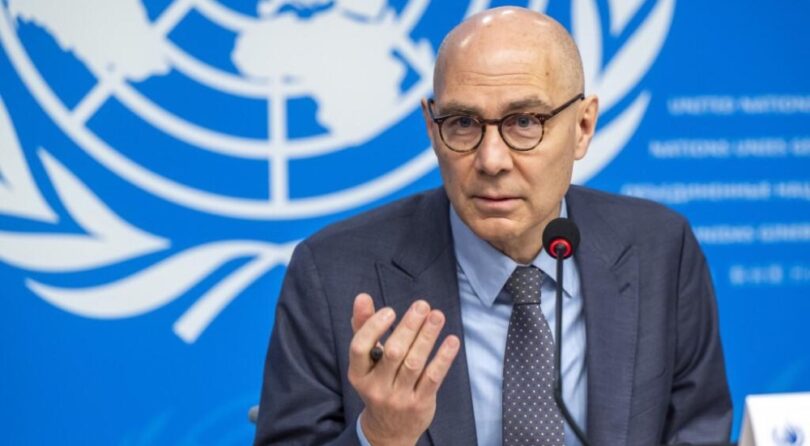
UN High Commissioner for Human Rights Volker Türk delivered the warning in a message ahead of World Press Freedom Day, observed annually on May 3.
He said journalism has become an increasingly dangerous profession, with media workers being bombed in their vehicles, abducted from their offices, imprisoned, and dismissed from their jobs for doing their work.
Roughly 330 media workers are currently detained worldwide, alongside approximately 500 citizen journalists and human rights bloggers.
Türk warned that laws on defamation, cybercrime, disinformation, and terrorism are being weaponised not to protect the public but to silence and intimidate journalists.
No fewer than 14 journalists have been killed since January, and only about a tenth of journalist killings over the past two decades has led to full accountability.
Türk identified armed conflict as the highest risk environment for journalists, pointing specifically to Gaza. His office verified the killing of nearly 300 journalists since October 2023, with many more injured. Lebanon has emerged as the deadliest country for media workers so far in 2026.
The crisis is not limited to war zones. Türk highlighted his recent visit to Mexico, where reporters covering corruption, environmental harm, and organised crime face grave dangers extending to their sources and families. He also raised alarm over what he described as growing transnational repression, citing attacks on Iranian journalists living abroad as a recent example.
Online harassment remains a particularly acute threat for women journalists, three quarters of whom have faced abuse including smear campaigns and threats of sexual violence.
Reports of online violence against women journalists have doubled since 2020. Türk warned such targeting risks creating what he called a disinformation society, where journalists are forced to obscure facts simply to stay safe.
UN Secretary-General António Guterres added his voice, noting that press freedom is under unprecedented strain globally from economic pressures, new technologies, and deliberate manipulation. He said governments must do more to protect journalists, shield them from surveillance, investigate violations, and ensure those responsible are held to account.
The Reporters Without Borders 2026 World Press Freedom Index found that for the first time in its 25-year history, over half of the world’s countries fall into the difficult or very serious categories for press freedom, with the overall average score at its lowest ever recorded level.
UNESCO’s latest report on global trends in freedom of expression reveals a 10 percent decline in freedom of expression worldwide since 2012, a setback it says is comparable only to the periods surrounding the two World Wars and the late Cold War era.
This year’s World Press Freedom Day global conference, themed “Shaping a Future at Peace,” is being held in Lusaka, Zambia on May 4 and 5.
The UNESCO/Guillermo Cano World Press Freedom Prize was awarded to the Sudanese Journalists Syndicate, in recognition of its work documenting the targeting of journalists in Sudan’s ongoing conflict, during which 32 journalists have been killed and 556 violations against media workers recorded.