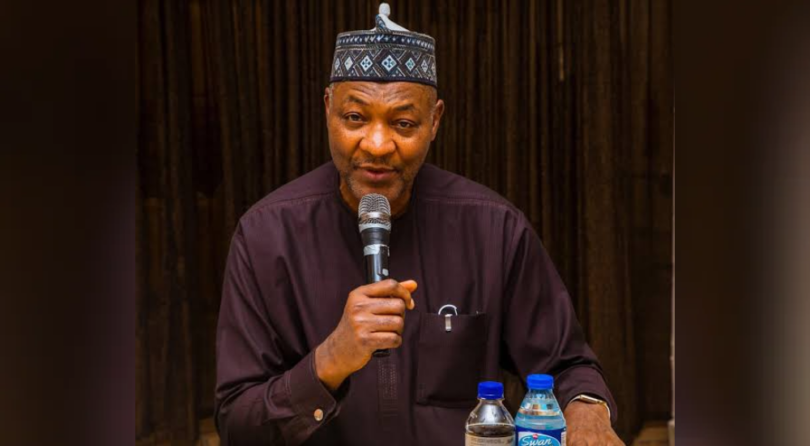
A former Vice-Chancellor of Bayero University, Kano, Prof. Sagir Adamu Abbas has said that the conflict between Nigerian universities and professional bodies is threatening university autonomy in the country.
Abbas stated this while presenting a paper on the impact and conflict between professional bodies and universities at the 2026 Retreat of the National Universities Commission with Vice-Chancellors of all Nigerian Universities holding on Tuesday in Abuja.
According to him, external academic regulations narrow the university’s statutory capacity and directly impact university autonomy where external requirements determine academic decisions.
He cited instances where professional bodies prescribe who should teach courses, saying “we have places where they are saying all their courses must be taught by medical doctors. This is in direct conflict with the autonomy of the university.”
Abbas noted that the Senate in universities has statutory powers over curriculum, teaching, assessment and academic standards, but direct external prescription bypasses the constraint established by academic process.
He lamented that some professional bodies insist on being independent of the NUC and go directly to departments to instruct them to do things which sometimes contradict what is established by NUC and by the Senate.
To resolve the conflict, Abbas proposed that professional bodies should channel their requirements through the NUC, through the Core Curriculum and Minimum Academic Standards (CCMAS).
He also proposed exploring the 70-30 window in the Nigerian university system, where professional bodies can inject their inputs into the 70 percent portion through the NUC, and also approach universities for the 30 percent.
The former VC proposed a “before training and after framework” where professional bodies bring in their technologies, ethics and practice input through NUC and CCMAS before training.
“During training, this is exclusive to the university and NUC. During training, professional body is not supposed to be in. It is a responsibility by law for the university to teach, for the university to assess,” he said.
According to him, after students acquire their degrees and are out of the university, it becomes the exclusive preserve of professional bodies to register them, license them, handle ethics, discipline and continuous professional development.
“There is a huge difference between a degree and a license. A degree is not equal to a license to practice. License to practice is exclusive,” he stressed.
He recommended harmonising the laws, adopting coordinated accreditation process, protecting the 30 percent, separating academic qualification from professional accreditation, and establishing a permanent NUC-University-professional body coordination agreement.
Earlier, declaring open the Retreat, the Minister of State for Education, Prof Suwaiba Said Ahmad commended the Executive Secretary of NUC, Prof. Abdullahi Yusufu Ribadu and his Management Team for resuscitating the NUC tradition after so many years.
She said the theme of the Retreat, ‘Enhancing Regulatory Compliance, Governance, Leadership, and Partnership in the Nigerian University System’, is highly appropriate and forward-looking.
Ahmad said University systems all over the world are greatly being influenced by artificial intelligence, digital learning, data analytics, virtual laboratories and changing funding models, adding that adoption of artificial intelligence must be accompanied by attention to academic integrity, ethics and data protection.
She charged Vice-Chancellors to operate within established governance structures, entrenched due processes and prioritise transparency and accountability in financial management, procurement, recruitment, promotion, admissions and examinations.
In his address, the Executive Secretary of NUC, Ribadu said the Retreat provides a valuable platform to pause, reflect, engage frankly and collectively consider the future of University education in Nigeria.
Ribadu said the Commission under his leadership has continued to strengthen its operational guidelines, including the development of new Guidelines for the Award and Use of Honorary Doctorate Degrees with sanctions for defaulting Universities.
He said the Commission has also introduced Post Matriculation Monitoring and Carrying Capacity Visit to Universities with a view to improving the quality of admission processes.
Ribadu said quality assurance in higher education is driven internally and externally and Vice-Chancellors as Chairmen of Senate play critical roles either way.
He urged universities to embrace digital technologies in teaching, learning and administration, disclosing that the Commission has developed and deployed the e-NUC as a transformative digital platform designed to automate its entire workflow.
The highlight of the event was the launch of the Benchmark Statements on Student Support Facilities and services in Nigerian Universities.