
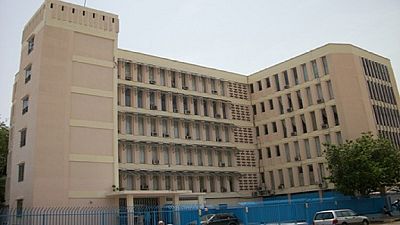
CBG Sets December 31, 2026 Deadline, Demands Skills Transfer and Uninterrupted Banking Operations
The Central Bank of The Gambia (CBG) has directed commercial banks operating in the country, including Nigerian-backed lenders such as Access Bank, GTBank, FirstBank, Ecobank and Zenith Bank, to commence the phased replacement of non-Gambian employees with suitably qualified Gambian nationals.
The regulator has given the affected banks until December 31, 2026, to complete the localisation process.
The directive was contained in a circular dated September 16, 2026, signed by the CBG Second Deputy Governor, Dr. Paul J. Mendy, following a meeting with managing directors of commercial banks on August 27 and an industry-wide assessment of the employment of non-Gambian personnel in The Gambia’s banking sector.
According to the CBG, the study identified a “relatively high number” of non-Gambian employees working in banks beyond those formally recognised as expatriate staff.
The regulator said the practice was contrary to provisions of The Gambia’s Labour Act 2023 and inconsistent with Guideline 9, which governs the employment of expatriate personnel in the banking industry.
The CBG consequently ordered all banks to adopt a phased approach to replacing affected non-Gambian employees with qualified Gambians.
“Consequently, all banks are required to adopt a phased approach to replacing existing non-Gambian staff with suitably qualified Gambian nationals, with appropriate arrangements for skills transfer and continuity of operations,” the regulator stated.
The directive requires banks to ensure that the transition does not disrupt banking services or result in the loss of critical institutional knowledge.
Banks are also expected to put mechanisms in place for the transfer of skills and institutional knowledge to Gambian employees as the affected positions are progressively localised.
What The Law Says
The CBG said its directive is anchored on provisions of the Labour Act dealing with the training and development of Gambian workers.
Under Section 38(1) of the Act, an employer granted an expatriate quota for an expatriate position is required to employ a Gambian counterpart to understudy the expatriate.
The provision is designed to facilitate the transfer of research, development, technology, knowledge and skills to Gambian employees.
The law further provides that the Expatriate Quota Board should not grant an expatriate quota for a position where the required knowledge, skills or expertise are already available locally.
Employers who violate expatriate employment requirements also face financial penalties.
An employer that engages an expatriate without obtaining the required expatriate quota clearance, or fails to renew an existing clearance, may, upon conviction, face a fine of not less than 500,000 Gambian dalasis.
Similarly, an employer that fails to provide a Gambian understudy for an expatriate employee commits an offence and may be liable to a fine of at least 500,000 dalasis upon conviction.
The legal framework therefore does not constitute an outright prohibition on expatriate employment. Rather, it subjects such employment to regulatory approval while requiring employers to develop and transfer relevant skills to Gambian workers.
Nigerian Banks In The Spotlight
The CBG directive is expected to prompt Nigerian-owned and Nigerian backed banks operating in The Gambia to review their existing staffing structures and expatriate arrangements.
The affected institutions include Access Bank, GTBank, FirstBank, Ecobank and Zenith Bank, among other commercial banks operating in the country.
However, the CBG circular did not name any individual bank as having breached the law, nor did it specifically accuse the Nigerian-owned institutions of violating expatriate employment requirements.
The directive is therefore an industry-wide regulatory measure, requiring banks to bring their employment structures into line with existing labour laws and banking-sector guidelines.
Individual lenders will be responsible for identifying suitably qualified Gambian nationals to fill affected positions while ensuring that the transition does not compromise banking operations.
The banks are also expected to manage the process in a manner that preserves institutional knowledge through structured handover and skills transfer arrangements.
THISDAY reports that it contacted most of the affected banks for their reactions to the directive and its potential implications for their operations in The Gambia.
The institutions requested additional time to respond to the enquiries.