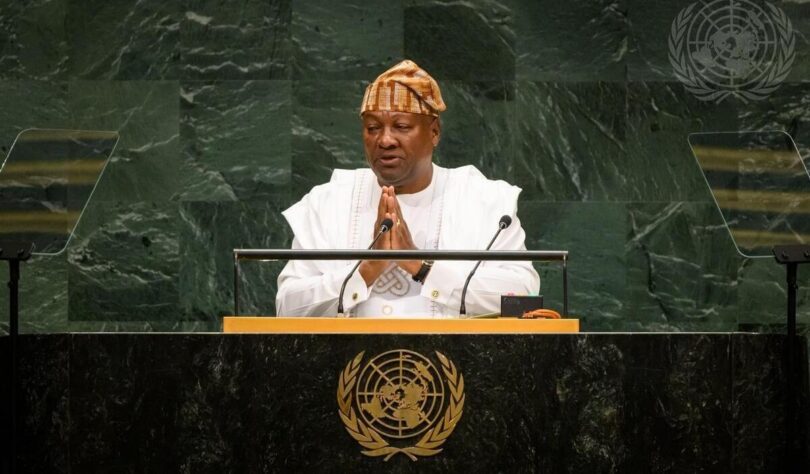
Ghanaian President John Dramani Mahama has called on the United Kingdom to issue a formal apology for its role in the transatlantic slave trade and return African cultural artefacts taken during slavery and colonial rule.
Mahama outlined the demands in a statement on Sunday, November 1, following British Prime Minister Andy Burnham’s expression of openness to a formal apology and structured dialogue with countries affected by the slave trade.
The Ghanaian president, who serves as the African Union Champion on Reparations and Chair of the Global Advisory Panel on Reparatory Justice, welcomed the British leader’s position but stressed that an apology alone would not address the lasting consequences of slavery and colonialism.
He identified five areas that should guide the proposed discussions involving Ghana, the African Union (AU), the Caribbean Community (CARICOM), the African diaspora and countries that participated in the slave trade.
They include a formal apology, coordinated efforts to dismantle systemic racism and Afrophobia, investments in education, healthcare and youth empowerment, the restitution of stolen cultural heritage, and development partnerships to address structural poverty and inequalities in the global economic system.
Mahama said the discussions should also address unfair global debt arrangements that continue to constrain developing countries.
He described the UK’s willingness to consider an apology as a significant development in efforts to secure reparatory justice, particularly following the adoption of a Ghana-led United Nations resolution recognising the transatlantic slave trade and the racialised enslavement of Africans as the gravest crime against humanity.
The resolution was adopted in March, although the UK abstained during the vote.
Mahama said acknowledgement of the atrocities and a formal apology could not reverse the injustices suffered by millions of Africans but would represent a departure from historical denial and create an opportunity for healing and redress.
The Ghanaian president also called for the proposed dialogue to be conducted in good faith, acknowledging that participating countries might hold different positions on reparations.
He said the discussions should draw on the Accra Next Steps Commitments, CARICOM’s Ten Point Plan and the African Union’s declarations on reparatory justice.
The British government’s position comes after Burnham said the UK was willing to engage in structured discussions and listen to calls for a formal apology. However, he ruled out financial reparations, arguing that people living today should not be held liable for historical wrongs.
Ghana has been leading efforts to secure the return of African cultural property held in foreign museums and private collections, alongside broader demands for reparatory justice.
Mahama reaffirmed Ghana’s readiness to work with the UK, African countries, CARICOM and the wider African diaspora towards reconciliation, restitution and addressing the enduring effects of slavery.