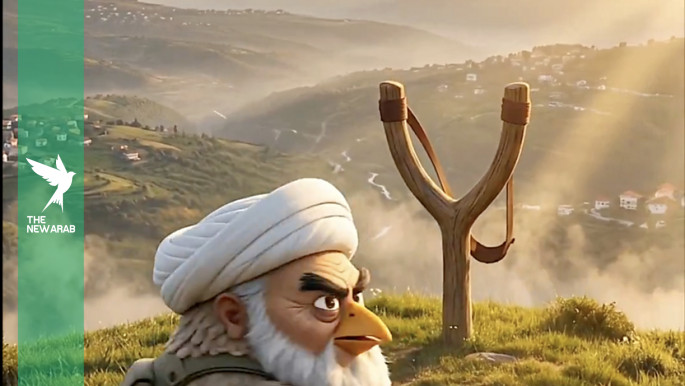
The video triggered a nationwide backlash in Lebanon, escalating into sectarian tensions, legal action and warnings over civil peace [Getty]
A satirical video generated using artificial intelligence and aired by the privately owned Lebanese Broadcasting Corporation International (LBCI) has triggered a nationwide backlash in Lebanon, spiralling into a sectarian row and prompting judicial intervention.
The AI-generated clip portrayed Hezbollah Secretary General Naim Qassem and fighters from the group as cartoon characters styled on the Angry Birds game, placing them in a simplified, game-like battlefield scene tied to the ongoing war.
Israeli soldiers were depicted as pigs, echoing the game’s visual coding of the opposing side.
While intended as satire, the segment aired by LBCI, founded in the 1980s by the staunchly anti-Hezbollah Christian party Lebanese Forces and currently chaired by Maronite Christian businessman Pierre El Daher, was widely interpreted by the Shia group’s supporters as a deliberate provocation.
Supporters of the group pointed in particular to the depiction of Qassem in religious attire, including his turban, in a cartoon format, which they said crossed from political commentary into sectarian insult and trivialised the group’s “martyrs” and role in the Israel conflict.
Hezbollah condemned the video as “deliberate incitement”, warning it risked dragging the country into sectarian strife. Although the group urged supporters to exercise restraint, the backlash quickly escalated on social media.
The group said in a statement on Saturday that the video contained “offensive and cheap insults that degrade political discourse to a repulsive level”.
In response, its supporters launched an online campaign targeting Bechara Boutros al-Rai, widely seen as Lebanon’s highest Christian authority, circulating images and posts deemed insulting.
That campaign triggered widespread condemnation across political and religious circles and raised fears of escalating sectarian tensions.
Lebanese authorities moved to contain the fallout with a judicial order issued by Public Prosecutor Ahmad Rami al-Haj, which led to the removal of the LBCI video and the opening of an investigation into the broadcaster.
Meanwhile, religious leaders from across sects expressed solidarity with Rai. Grand Mufti Abdel Latif Derian condemned the insults, warning they undermine national dignity, while Druze leader Sami Abi al-Muna described the attacks as a threat to civil peace and coexistence.
President Joseph Aoun also denounced insults against religious figures, warning against sliding into sectarian strife, and calling for disagreements to remain within political boundaries.
Prime Minister Nawaf Salam similarly urged restraint and warned against hate speech that could inflame tensions.
The controversy comes amid a highly charged domestic climate shaped by ongoing Israeli attacks, the displacement of around one million people, and deep political divisions over Hezbollah’s role and the current war.
Lebanon officially recognises 18 religious sects under a confessional power-sharing system, where political authority and representation are divided along communal lines, contributing to persistent cross-communal tensions.