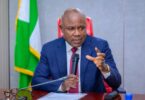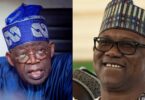
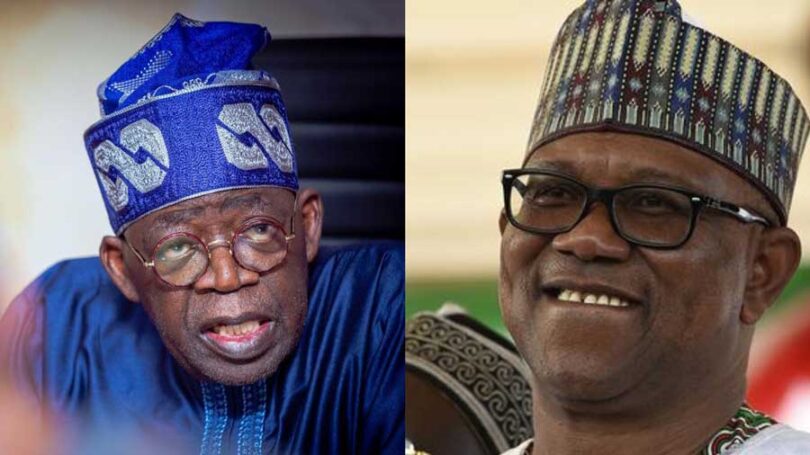
The presidential candidate of the Nigeria Democratic Congress (NDC), Peter Obi, has criticised the Federal Government’s 30-day petrol discount, describing it as a “reactive and confused approach to governance” that will not address poverty, unemployment and other economic challenges facing Nigerians.
Obi said the temporary discount, introduced by the President Bola Tinubu-led All Progressives Congress (APC) government to ease the hardship associated with rising petrol prices, amounted to a substitution of political optics for sound economic policy.
The former Anambra State governor stated this in a statement titled, “One Month Discount on Petrol: From Reactive Policies to Flawed Outcomes!” on Sunday.
He said he had delayed commenting on the announcement to allow time to assess its impact before reaching a conclusion on the policy.
“I had delayed in reacting to the announcement just to give the benefit of doubt and watch the outcome of the policy. Now, having assessed the outcomes, the policy is a substitution of political optics for sound policy,” Obi said.
He faulted the manner in which Tinubu removed the petrol subsidy on May 29, 2023, arguing that the decision was taken without adequate consultation or an assessment of its potential consequences for the economy and the livelihoods of ordinary Nigerians.
“As Nigerians will recall, President Bola Tinubu on May 29, 2023, most carelessly removed fuel subsidy without any consultation or proper assessment of the negative impacts of such policies on our economy, particularly on the livelihood of ordinary Nigerians,” he said.
Obi also criticised the sequencing and implementation of subsequent economic policies, including the floating of the naira and tax reforms, which he said compounded the hardship caused by the subsidy removal.
According to him, the policies were implemented in a disorganised manner, with insufficient attention to their combined effects on Nigerians.
He further faulted the Federal Government for operating three budgets simultaneously, arguing that the practice raised concerns about transparency and accountability.
“Collectively, these policies stoked inflation in all sectors, pushing in most cases unbearable price hikes across board which placed severe shocks and other adverse consequences on Nigerians,” he said.
Obi attributed rising poverty, increasing costs of goods and services, declining economic opportunities and business closures to the effects of the government’s economic policies.
He also listed unemployment, insecurity, widening inequality and the migration of young Nigerians among the consequences, adding that the country’s overall standard of living had deteriorated.
“Expectedly, the outcomes are what they are—increasing multi-dimensional poverty, skyrocketing costs of goods and services, shrinking opportunities, exit of many businesses, mounting unemployment, disturbing insecurity, widening inequality, forced migration of our youths and general decline in the well-being of Nigerians,” he said.
The NDC presidential candidate accused the Tinubu administration of failing to conduct and publish detailed regulatory impact assessments of its policies before implementation.
He argued that such assessments would have helped the government identify potential consequences, consult relevant stakeholders and develop measures to protect vulnerable Nigerians.
“Most unfortunately, rather than engage in detailed and published regulatory impact assessment of their reactive policies, the President Bola Tinubu’s-led government has again demonstrated their well-known incompetence and insensitivity to governance,” Obi said.
He maintained that a government committed to effective economic management should engage stakeholders and ordinary Nigerians before introducing major policy changes.
“With a detailed and published regulatory impact assessment of policies, a competent government would have pursued robust and sincere engagements and consultations with key stakeholders and ordinary Nigerians to recraft and implement inclusive and sustainable socio-economic growth strategies and policies,” he said.
Obi also questioned the rationale behind the 30-day petrol discount, particularly its potential to address the broader economic challenges confronting the country.
He queried whether the reduction, which he put at less than five per cent of petrol costs, would significantly reduce poverty, unemployment, insecurity and inequality or stimulate productivity and exports.
“What really does the President Bola Tinubu-led government want to achieve with a one-month discount of less than 5% on fuel cost? Will it reduce poverty, unemployment, insecurity, and inequality? Will it increase productivity and exports?” he asked.
He also questioned whether the initiative was intended to determine the feasibility of restoring the petrol subsidy or was politically motivated ahead of the 2027 general election.
“Is it a test to ascertain if subsidy should be restored? Is it another political gambit in the face of threats of electoral loss in the 2027 election? Too many questions, no answer!” Obi said.