
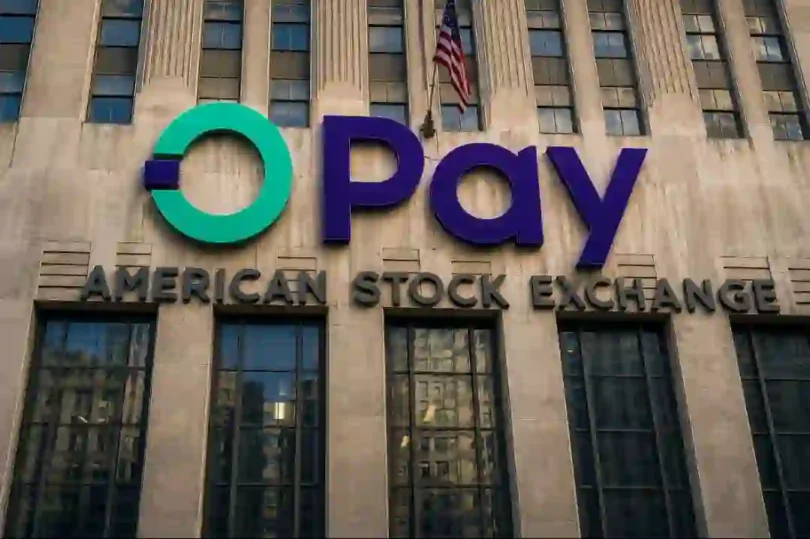
The outrage trailing OPay’s proposed U.S. listing is more than a passing social media flare-up—it is a revealing moment in Nigeria’s economic evolution.
At the centre of the backlash lies a blunt and uncomfortable question: should a company built on Nigerian users, Nigerian merchants, and Nigerian market trust ultimately export its biggest financial reward abroad?
It is, for many observers, an eyesore for the Nigerian stock market as OPay heads to the American stock exchange.
For years, millions of Nigerians have powered OPay’s ascent—POS agents in rural communities, traders in congested markets, and everyday users navigating a fragile financial system. That collective dependence turned the fintech into a dominant force. Yet, as it inches toward a foreign IPO, many of those same contributors risk being locked out of the most consequential phase of its growth: ownership.
This is not just about OPay. It is about a recurring African dilemma.
Across the continent, fast-growing startups consistently turn outward at the point of maturity—heading to New York, London, or other global financial centres in search of deeper liquidity, stronger valuations, and regulatory certainty. Those decisions are commercially rational. But they come with a quiet cost: local capital markets remain shallow, domestic investors are sidelined, and wealth created in African economies is often crystallised elsewhere.
That is the real source of public anger.
Still, outrage alone does not build markets.
If Nigeria wants its innovation champions to list locally, it must first fix the ecosystem that pushes them away. Investors need confidence. Regulations must be predictable. The capital market must deepen beyond its current limits. Companies do not abandon strong systems—they migrate toward stronger ones.
At the same time, companies like OPay must recognise the moral dimension of their growth. Financial inclusion cannot stop at access to digital payments; it should extend to access to equity, ownership, and long-term wealth creation. Mechanisms such as dual listings, local equity windows, or structured Nigerian participation could soften public tension while strengthening legitimacy.
Calls for boycott, however emotionally charged, risk missing the bigger picture. Millions of Nigerians still depend on these platforms daily. Abrupt disengagement could destabilise the same ecosystem critics seek to protect.
What is required is not anger alone—but structure, reform, and negotiation.
Ultimately, Nigeria faces a defining choice: remain a consumer base for global capital flows, or evolve into a system where the wealth it helps create is also owned at home.
Because beyond the OPay debate lies a larger truth.
The real contest is not where Nigerian fintech companies list.
It is who ultimately owns the future they are building.