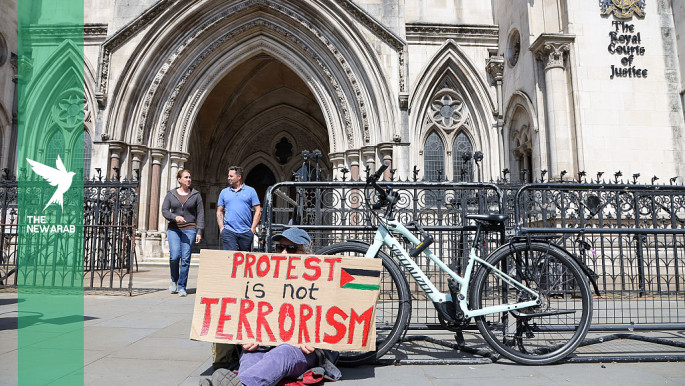
The move means the defendants could face a longer prison sentence and be designated as terrorists upon release [GETTY]
Four Palestine Action activists convicted of criminal damage over a raid at an arms factory in Bristol could now be facing terror charges in a move that was kept secret from the jury in their original trial, it was announced on Tuesday.
Judge Jeremy Johnson is expected to add a “terrorist connection” to the charges against Charlotte Head, Samuel Corner, Leona Kamio and Fatema Rajwani, under section 69 of the Sentencing Act 2020, despite the jury convicting them only of criminal damage, unaware that a terror link would later be added.
The judge ruled in a preparatory hearing in March 2025 that there appeared to be a “terrorist connection” as the activists were trying to influence the Israeli government by restricting its access to weapons.
The move means the defendants could face a longer prison sentence and be designated as terrorists upon release, impacting their future lives.
Novara Media reported that the “terror” connection was kept secret from the jury, and UK media outlets were prevented from reporting on the matter due to court-imposed restrictions, which were lifted on 12 May.
The news site said that this might be the first case in British history where a court will attempt to sentence activists taking non-violent direct action as terrorists.
Novara also reported that due to the restrictions on the press, they were unable to report that the judge banned the defendants from speaking on why they joined Palestine Action and providing information on Israel’s genocidal war on Gaza or the Israeli-owned Elbit Systems weapons manufacturer. The restrictions have now been lifted.
The judge also imposed strict limitations on what the defence teams could say to the jury before closing speeches, including a ban on mentioning jury equity (the jury’s power to decide based on conscience) or telling jurors that a judge cannot force them to convict.
Defendants were also banned from arguing that the actions were legally justified by necessity, by preventing a greater crime, or by trying to stop a greater loss of life and property in Palestine.
The use of the terrorism legislation for this case is based on property damage and will need to rely on the “serious property damage” clause under the Terrorism Act 2000. Damage caused during the protest, including to drones and machinery, is estimated at £1 million.
Your Party’s Zarah Sultana used parliamentary privilege in April to expose the court order that withheld the information from jurors and the British public.
The four were convicted on 5 May over a protest at an Elbit factory near Bristol in August 2024, where they damaged quadcopter drones destined for export to Israel. Samuel Corner was also convicted of grievous bodily harm without intent.
A further two activists, Zoe Rogers and Jordan Devlin, were acquitted. Most have served 18 months on remand, while Corner had been incarcerated for 21 months.