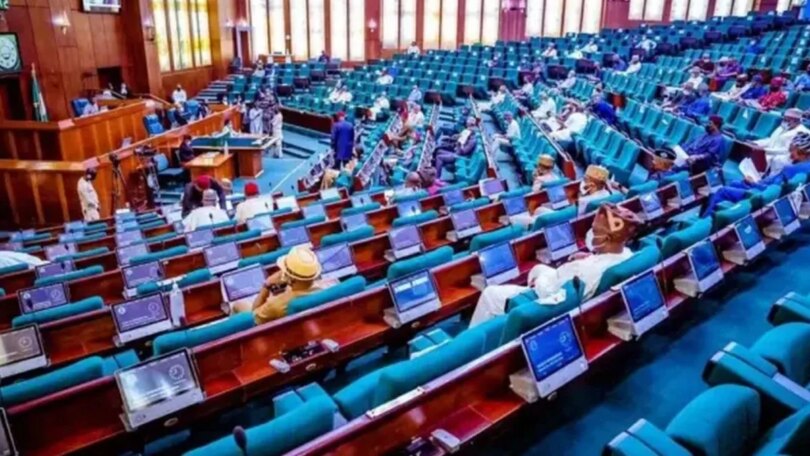
The House of Representatives Public Accounts Committee is set to begin investigations into alleged financial infractions involving the Nigerian National Petroleum Company Limited and the Independent National Electoral Commission, with the audit queries involving more than N802.19 billion.
The committee will question officials of both institutions as part of a wider review of findings contained in reports submitted by the Auditor-General for the Federation.
Politics Nigeria reports that the exercise is scheduled to take place at the National Assembly in Abuja on Monday, October 5, and Tuesday, October 6, 2026.
The audit reports covering the 2021, 2022 and 2023 financial years raised concerns over transactions involving public funds, procurement processes, revenue management, payments and compliance with government financial regulations.
The NNPCL alone is expected to explain transactions linked to about N514 billion in alleged financial infractions contained in the 2021 audit report.
INEC, on the other hand, is expected to respond to queries involving about N288.19 billion contained in the Auditor-General’s 2022 report.
The combined figure puts the value of the issues before the committee at more than N802 billion.
The investigation is being conducted by the Public Accounts Committee chaired by Bamidele Salam, a member of the House representing Ede North/Ede South/Ejigbo/Egbedore Federal Constituency of Osun State.
The committee derives its authority from Sections 85, 88 and 89 of the 1999 Constitution, as amended, and the relevant provisions of the House Rules.
Its responsibility includes examining government accounts, investigating alleged revenue losses and determining whether public institutions complied with financial regulations.
A member of the committee, who spoke on the condition of anonymity because he was not authorised to speak officially for the panel, disclosed that officials from NNPCL and INEC had been scheduled to appear before the lawmakers.
He said, “On Tuesday at the National Assembly Complex, the House of Representatives Public Accounts Committee will be questioning several agencies.
“As a matter of fact, we are starting on Monday, October 5, with some agencies including the Code of Conduct Tribunal, Federal Capital Territory Judicial Service Commission, Federal Colleges of Education, Okene and Gombe and the University Teaching Hospital, Ilorin. There are others I have not mentioned.
“Tuesday is special because we hope to have in the House the accounting officers and subject matter experts from the Nigerian National Petroleum Company Limited and the Independent National Electoral Commission.
“For the NNPC L, I am aware that the Auditor General’s Report of 2021 raised alleged financial infractions of about N514bn, while in the case of INEC, we shall be looking at clarifications on alleged financial breaches of about N288.19bn as contained in the 2022 Auditor General for the Federation audit query.”
The NNPCL queries cover several transactions relating to domestic crude oil sales and Federation revenue.
One of the major issues flagged by the Auditor-General involves an alleged irregular deduction of N343.64 billion from domestic crude oil sales.
Another N83.66 billion was reportedly identified as miscellaneous revenue allegedly kept in a sinking fund account.
The audit findings also raised questions over alleged unauthorised deductions of N82.95 billion from Federation revenue.
In addition, about N3.75 billion was reportedly identified as a shortfall connected with the sale of petroleum products.
The committee is expected to demand documents and explanations from the NNPCL to establish the circumstances surrounding the transactions.
The oil company will also have the opportunity to respond to the findings and provide supporting records to the lawmakers.
The investigation comes amid continued scrutiny of the management of oil revenues and financial remittances by government-owned institutions.
NNPCL plays a major role in Nigeria’s petroleum sector, including crude oil production, trading, refining and other activities connected to the country’s oil industry.
Recall, Politics Nigeria earlier reported that the House of Representative had began probe of N432 billion allegedly owned by NNPC and oil companies.
The financial accountability of the company therefore remains a major issue whenever questions are raised over revenue that should accrue to the Federation.
INEC is also expected to face questions over its financial dealings.
The electoral commission’s audit queries reportedly cover procurement processes, payments to contractors and statutory deductions.
The issues relate in part to expenditure incurred during the tenure of former INEC Chairman, Professor Mahmood Yakubu.
Yakubu has since left the commission and was appointed an ambassador by the Federal Government.
The committee member said the audit queries included transactions associated with the commission’s preparations for previous elections.
“There are several audit queries concerning procurement procedures, payments made to contractors as well as failure to remit statutory deductions by the commission during the administration of the former INEC Chairman (Prof Mahmood Yakubu) who is now an ambassador,” he said.
The lawmaker declined to provide full details of the alleged breaches when asked about the specific transactions under scrutiny.
He, however, said the committee would examine spending linked to the 2019 general election.
“There are questions to be asked on money spent starting from the 2019 general election.”
One of the transactions previously flagged in the Auditor-General’s 2022 report involved the procurement of smart card readers used during the 2019 general election.
The report reportedly questioned the payment of more than N5.31 billion for the supply of the devices without prior approval from the Bureau of Public Procurement.
The smart card readers were part of the technology deployed by INEC for voter accreditation during the 2019 election.
The commission later moved to the Bimodal Voter Accreditation System for the 2023 general election, replacing the earlier system with technology designed to use fingerprints and facial recognition for voter verification.
The latest probe will therefore require INEC officials to explain the transactions and provide relevant procurement and payment documents.
The Public Accounts Committee is also expected to examine whether the agencies followed established financial procedures and whether outstanding issues raised by the Auditor-General have been satisfactorily addressed.
However, the existence of an audit query does not automatically amount to proof of financial misconduct.
The affected institutions are entitled to appear before the committee, explain the transactions in question and submit documents or other evidence in their defence.
The committee will then consider the responses and determine whether further action is required.
Apart from NNPCL and INEC, several other government institutions are expected to appear before the committee as the lawmakers continue their review of the Auditor-General’s reports.
Among those listed are the National Mathematical Centre, National Power Training Centre, National Research Institute for Chemical Technology and the National Biotechnology Research and Development Agency.
The Code of Conduct Tribunal, Federal Capital Territory Judicial Service Commission, Federal Colleges of Education in Okene and Gombe and the University Teaching Hospital, Ilorin, are also among the institutions scheduled for questioning.